
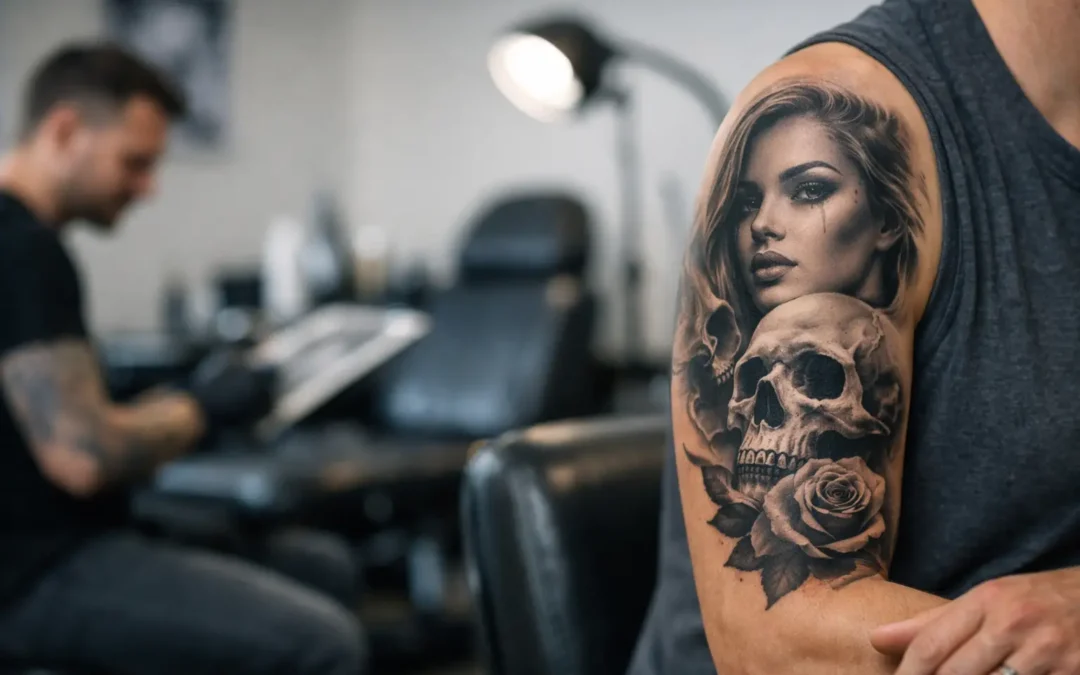
A black and grey tattoo can look quiet from across the room, then reveal an entire story when someone gets close enough to see the detail. That range is exactly why searching for black and grey tattoos near me should be about more than finding the closest open appointment. You are choosing an artist to translate an idea, memory, person, or style into permanent artwork.
Black and grey work relies on control. There is no bright color to distract from uneven shading, weak contrast, or a portrait that misses the expression. Whether you want a small fine-line piece, a realistic family portrait, a religious design, or the first section of a full sleeve, the right artist and planning process make the difference.
How to Search for Black and Grey Tattoos Near Me
Start with portfolios, not promotions. A strong portfolio should show healed work as well as fresh tattoos, multiple subjects, and pieces of different sizes. Fresh ink can look bold because the skin is irritated and the stencil is new. Healed work gives you a better sense of how an artist handles smooth gradients, readable details, and contrast after the tattoo settles into the skin.
Pay close attention to the kind of black and grey tattoo you want. “Black and grey” is a broad category. A finely detailed micro tattoo requires a different approach than a high-contrast realism sleeve. Portraits demand accurate proportions and lifelike skin texture. Chicano-inspired lettering needs clean composition and smooth shading. A cover-up requires an artist who understands how to work with existing lines, dark areas, and the limits of the old tattoo.
Look for consistency, not one impressive photo. Can the artist create clean edges? Do the dark areas feel intentional rather than muddy? Is there enough open skin for the design to breathe? Great black and grey work uses contrast with purpose. The deepest blacks anchor the composition, midtones create form, and lighter areas protect highlights so the design remains readable over time.
Location still matters, especially for a large custom project. A sleeve or back piece may take multiple sessions, so choosing a studio you can return to comfortably is practical. For clients in Tampa, that also makes in-person consultations easier when a design needs reference review, placement changes, or a larger plan mapped out in stages.
Black and Grey Is About Contrast, Not Just No Color
Many clients arrive with a photo they like and assume it can be copied directly onto skin. Reference images are useful, but tattoo design is not a copy-and-paste exercise. A skilled artist evaluates the image for composition, flow, available skin space, and what details will still make sense at the intended size.
For example, a portrait the size of a business card cannot hold the same level of realism as one placed on the upper arm or thigh. A tiny quote may look elegant in a digital mockup but become hard to read if the lettering is too narrow. A full sleeve needs transitions between elements so it feels like one piece of art rather than separate images stacked together.
This is where a custom process earns its value. The artist may simplify a background, strengthen the light source, enlarge an important feature, or recommend a different placement. Those adjustments are not a compromise on your vision. They are how your vision becomes a tattoo that looks intentional on your body instead of a photograph squeezed into the wrong space.
Black and grey also offers flexibility. It can be soft and delicate, dark and dramatic, highly realistic, illustrative, or inspired by traditional tattoo imagery. The trade-off is that every decision is visible. A polished design needs a clear focal point and enough contrast to avoid turning into a flat gray field years later.
Bring the Right Ideas to Your Consultation
A consultation should feel like a creative conversation, not a quick transaction. You do not need a perfect drawing or every detail solved before you walk in. You do need a clear sense of what matters most to you.
Bring a few references that show the mood, subject matter, and style you are drawn to. If the tattoo has personal meaning, explain the story behind it. An artist can make stronger design choices when they understand whether a rose represents a person, whether a clock marks a specific date, or why a particular animal, city, symbol, or phrase belongs in the piece.
Be open about placement and size, but listen when an artist recommends a change. Certain body areas heal differently, move more often, or offer less room for fine detail. Hands, fingers, feet, ribs, and elbows can be challenging for different reasons. That does not mean they are off limits. It means the design should be planned for the reality of the placement, not just for a photo taken on the day of the appointment.
It also helps to discuss the future. If you know you want a sleeve eventually, say so before getting a single stand-alone piece. Planning the first tattoo around the larger composition can save you from awkward gaps, competing styles, or expensive reworking later.
At Socrates Ink Gallery, the consultation-to-drawing process is built around that collaboration. The goal is not to rush a client into a generic image. It is to create artwork that reflects the client while giving the artist the space to make sound design decisions.
A Clean Studio Is Part of Quality Work
The artistic side of tattooing gets most of the attention, but professional standards behind the scenes matter just as much. Your studio should be clean, organized, and prepared for a procedure that involves breaking the skin. You should feel comfortable asking how the workspace is set up, what single-use materials are used, and how the artist prepares equipment between clients.
A professional artist will not treat those questions like an inconvenience. They should explain the process clearly and make you feel respected, especially if this is your first tattoo. The right environment supports better work, too. When you feel safe, heard, and physically comfortable, it is easier to sit well and communicate during a longer session.
Do not choose solely on the lowest quote. Price reflects more than time with a tattoo machine. It can include original design development, experience, quality materials, studio standards, and the level of detail required. A small, simple tattoo may be completed in one visit. A realism piece, cover-up, or sleeve is usually a larger commitment that should be approached with patience.
Plan for the Session, Not Just the Design
Once you book, give yourself the best chance of a smooth appointment. Get good sleep, eat a real meal beforehand, stay hydrated, and wear clothing that gives the artist easy access to the placement. Avoid arriving rushed, overly tired, or after drinking alcohol. If you have health concerns, take medication that may affect bleeding, or are unsure whether tattooing is appropriate for you, speak with a qualified medical professional before your session.
For longer work, bring what the studio allows to help you stay comfortable, such as water, a snack, headphones, or a charger. More importantly, arrive with realistic expectations. Some sections of the body hurt more than others. Some designs need more than one session. A great tattoo is worth giving the artist enough time to place, stencil, line, shade, and refine it without forcing the process.
Aftercare deserves the same attention. Follow the instructions provided by your artist, keep the tattoo clean, avoid soaking it while it heals, and protect it from unnecessary friction and sun exposure. Healing is not the moment to experiment with random products or take advice from social media over the instructions designed for your specific tattoo.
Choose Art You Will Want to Live With
The best black and grey tattoo does not have to follow a trend. It should feel connected to your taste, your story, and the part of your body where it will live. Start with an artist whose work gives you confidence, bring honest references, and allow the design process to do what it is meant to do: turn an idea into art that holds up long after the appointment is over.
When you are ready, trust the process, ask thoughtful questions, and choose quality with the permanence of the work in mind.