
A new color tattoo should look vivid, intentional, and full of life – not like something you have to panic over every time it changes during healing. How you care for fresh color tattoo work in the first days and weeks affects comfort, surface healing, and how clearly that custom artwork settles into the skin.
Color saturation, smooth blends, fine highlights, and small details all deserve patience. Your tattoo is a fresh wound as well as a piece of art, so aftercare is not about chasing a perfect Instagram-ready heal overnight. It is about keeping the area clean, protected, and free from the habits that cause unnecessary irritation.
Follow Your Artist’s Bandage Instructions First
Your artist knows the placement, amount of work, and bandaging method used for your tattoo. That guidance comes first. A traditional wrap and an adhesive protective film do not have the same removal timeline or care routine, so do not treat them as interchangeable.
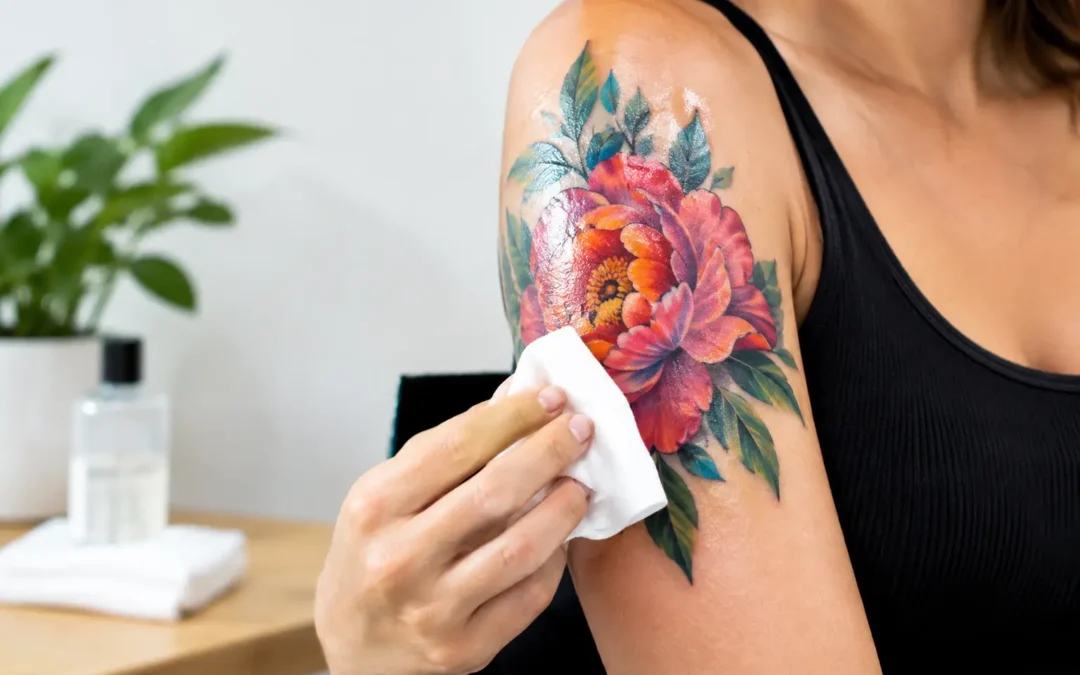
If you leave the studio with a standard bandage, remove it at the time your artist recommends. Wash your hands before touching the area, then gently clean the tattoo with lukewarm water and a mild, fragrance-free soap. Use your fingertips only. A washcloth, scrub, loofah, or nail brush can damage a tender tattoo and introduce irritation where you do not need it.
If your artist uses an adhesive healing film, keep it on for the recommended period unless it leaks, lifts enough to expose the tattoo, or causes a concerning reaction. Fluid collecting under the film can look dramatic, especially with a highly saturated color piece. That is usually a mix of plasma, ink, and moisture, not proof that the tattoo is failing. When in doubt, contact your artist before removing or replacing anything.
Clean It Gently, Then Let It Breathe
Once the initial bandage is off, clean the tattoo one to two times a day, or as directed by your artist. More washing is not better. Overwashing can dry the skin, create more redness, and make the healing process feel rougher than it needs to be.
After washing, pat the tattoo dry with a clean paper towel. Do not rub it with a bath towel that may hold detergent residue, bacteria, or loose fibers. Give the area a few minutes to air-dry, then apply a very thin layer of the aftercare product your artist recommends.
The word is thin. A tattoo does not need to be coated until it shines or feels slippery. Heavy ointment can trap heat and moisture, clog pores, and encourage irritated bumps. If your skin looks wet, greasy, or unable to breathe, use less at the next application.
Moisturize for Comfort, Not Saturation
During the first several days, the skin may feel tight, warm, or dry. A small amount of fragrance-free tattoo aftercare or gentle lotion can ease that discomfort. As the tattoo moves into the peeling stage, regular light moisturizing helps reduce cracking and the urge to scratch.
Avoid products with fragrance, exfoliating acids, retinol, alcohol, glitter, or strong essential oils. They may be fine for other parts of your skincare routine, but fresh tattooed skin does not need extra variables. Keep the routine simple until the tattoo is fully healed.
A color tattoo can look slightly dull or cloudy while it heals. This is normal. New skin forms over the tattoo, and flakes may contain small traces of pigment. Do not try to polish, scrub, or pick the color back into view. Once healing is complete, the settled color will look clearer.
Expect Peeling, But Never Pick It
Most tattoos begin to peel or flake after a few days. This stage can be frustrating because the tattoo may look uneven, patchy, or less bright for a short time. That does not mean the pigment is disappearing. It means the top layer of healing skin is doing its job.
Let flakes come off on their own. Picking at scabs or peeling skin can pull at healing tissue, create uneven areas, and raise the risk of infection or scarring. The same rule applies when the tattoo itches. Lightly tap the area or apply a small amount of approved moisturizer if needed, but do not scratch it.
If a tattoo develops thick, painful scabbing, rapidly expanding redness, unusual swelling, pus, fever, or worsening pain, contact a medical professional promptly. Your artist can guide you on normal tattoo healing, but signs of infection require medical attention.
Protect Fresh Color Tattoo Work From Sun and Water
The sun is hard on every tattoo, but it is especially unforgiving to bright color. UV exposure can fade pigment over time, and sunburn on a healing tattoo is a problem no client wants. Keep a fresh tattoo out of direct sunlight with clean, loose clothing whenever possible.
Do not apply sunscreen to an open or actively peeling tattoo unless your artist specifically tells you to. After the skin has fully healed, broad-spectrum sunscreen becomes one of the best long-term habits for protecting color, contrast, and detail. A well-healed tattoo can still fade if it is routinely exposed to Florida sun without protection.
Water requires the same common sense. Short showers are fine. Soaking is not. Avoid pools, hot tubs, oceans, lakes, baths, and saunas until the tattoo is fully healed. Those environments can soften healing skin and expose it to bacteria, chlorine, salt, and other irritants.
Dress and Move With the Placement in Mind
Healing is not one-size-fits-all. A tattoo on the forearm has different daily challenges than one on the ribs, foot, hand, inner bicep, or thigh. Friction, sweat, and repeated movement can make certain placements feel more sensitive and extend the irritated phase.
Choose clean, loose, breathable clothing that will not constantly rub the area. For a tattoo under a waistband, bra strap, sock, or work uniform, plan ahead. You may need to adjust your clothing choices for a few days so the tattoo is not compressed or scraped every time you move.
Exercise can usually continue in moderation if you feel well, but avoid activities that cause heavy rubbing, excessive sweat, or contact with shared surfaces. Fresh tattoos should not be pressed against gym benches, wrestling mats, or other high-contact equipment. Listen to your body and protect the artwork while it is vulnerable.
Do Not Let Advice From the Internet Override Your Artist
People mean well, but tattoo aftercare advice gets passed around like a family recipe. One person says dry heal only. Another recommends a thick layer of ointment. Someone else insists a tattoo needs to stay wrapped for far longer than your artist instructed.
A professional custom tattoo deserves a professional aftercare plan. Your artist has seen the work up close and understands the approach used during your session. If something looks unfamiliar, take a clear photo in good lighting and ask before experimenting with a new product or home remedy.
At Socrates Ink Gallery, the process does not end when you leave the chair. A strong tattoo experience includes the design, the application, a clean environment, and clear guidance for healing the artwork with confidence.
After Healing, Keep the Color Intentional
A tattoo is generally surface-healed within a few weeks, though deeper skin recovery takes longer. Continue treating the area gently until all peeling, scabbing, and tenderness have passed. Once it is fully healed, moisturize regularly and protect it from the sun.
If a small area heals lighter than expected, do not judge it too quickly. Give the skin time to settle, then check in with your artist about whether a touch-up is appropriate. Great tattoo work is built through craft, communication, and realistic expectations – not rushed fixes.
Your color tattoo was created to carry a story, a style, or a memory for years. Give it a calm, clean healing period, and let the art earn the time it needs to settle into its best form.