
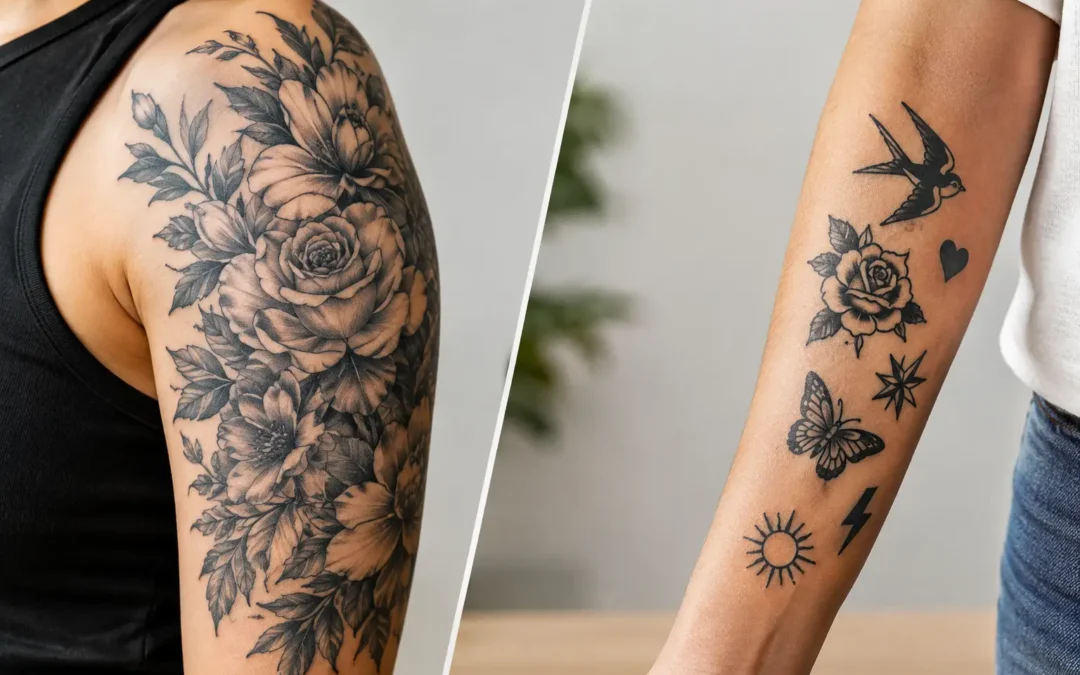
A tattoo can take an hour, a full day, or a series of appointments. It can begin with a design you spot on the wall or an idea that has lived in your head for years. When weighing custom tattoos versus flash tattoos, the best choice is not about which option is more legitimate. It is about choosing the process that matches the meaning, style, timeline, and level of personal involvement you want from permanent artwork.
Flash can be an excellent choice for a spontaneous, clean, well-executed tattoo. Custom work creates room for something built around your story, body placement, and visual taste. Knowing the difference helps you walk into the studio with clear expectations and leave with art you feel proud to wear.
What Is a Flash Tattoo?
A flash tattoo comes from a pre-drawn design created by a tattoo artist. Traditionally, flash sheets were displayed on studio walls or in books, giving clients a collection of ready-to-tattoo options. Today, artists may offer classic Americana flash, fine-line flash, black-and-grey designs, small color pieces, or limited event-specific collections.
The key feature is that the fundamental design already exists before your appointment. You select it because you connect with the image, the style, or the artist’s interpretation of a familiar subject. Depending on the studio and artist, flash may be tattooed exactly as shown, or it may allow small adjustments such as a different size, minor color changes, or a simple addition.
Flash is not automatically generic or low quality. In fact, artist-made flash is often a direct look at an artist’s personal style. A strong flash design has already been composed to read well on skin, fit a practical placement, and heal clearly. For clients who trust an artist’s eye and want a straightforward path to a great tattoo, that can be a real advantage.
What Makes a Tattoo Custom?
A custom tattoo is developed specifically for you. It may start with a reference image, a personal story, a favorite subject, a rough sketch, or even a feeling you want the piece to carry. From there, the artist translates your idea into an original design that works as a tattoo, rather than simply copying an image onto skin.
That translation matters. A photograph may make a powerful portrait reference, but the tattoo needs the right contrast, scale, line work, and placement to hold up over time. A Japanese-inspired sleeve needs flow around the arm, intentional background elements, and a composition that connects from one section to the next. A cover-up needs to account for existing pigment, skin tone, and the shape of the tattoo underneath.
With custom work, the consultation is part of the art. You discuss the subject, placement, size, style, details that matter most, and details that should be left out. Your artist then creates a design with your body in mind. The result should feel personal without becoming cluttered or overly literal.
Custom Tattoos Versus Flash Tattoos: The Real Differences
The biggest difference is the degree of collaboration. Flash asks you to choose from artwork that is already complete. Custom work asks you and the artist to build something together. Neither process is better for every client, but they create different experiences.
Originality and personal meaning
If your tattoo represents a person, a major life event, a cultural connection, or a highly specific visual idea, custom work usually makes more sense. It allows the design to include the details that give the piece its identity. This is especially valuable for portraits, memorial tattoos, sleeves, larger black-and-grey projects, and designs that need to integrate with existing work.
Flash can still be deeply meaningful. A rose, dagger, panther, butterfly, sacred heart, or small script piece can mark a moment in your life even if someone else has selected the same design. Meaning comes from the person wearing it, not just from whether the image was drawn from scratch. The difference is that flash offers a shared visual language, while custom work offers a more individualized one.
Time and scheduling
Flash is usually faster from decision to tattoo. If a studio accepts walk-ins and you find a design you love, you may be able to get tattooed that day. It is a strong option for a first tattoo, a smaller piece, or a day when you are ready to commit without a long planning phase.
Custom tattoos take more preparation. Your artist may need a consultation, reference review, design time, and a scheduled appointment. Large projects often require multiple sessions, particularly full sleeves, detailed color work, or cover-ups. The added time is not unnecessary delay. It gives the artist room to solve design problems before the needle touches skin.
Cost and value
Flash is often more predictable in price because the design, size range, and estimated tattoo time are established. For a smaller budget or a quick addition to a collection, it can be an accessible way to receive professional work.
Custom work may cost more because it includes design development, consultation, placement planning, and sometimes multiple revisions or sessions. Still, price should not be the only deciding factor. A permanent tattoo is not the place to choose an artist solely because they are the cheapest available. Consider the artist’s healed work, their ability in the style you want, their hygiene practices, and whether they understand your goals.
Placement and longevity
Flash designs are often made in flexible, tattoo-friendly sizes, but they may not be designed around one exact part of your body. A custom piece can follow the curve of a shoulder, wrap with an arm, balance a calf, or fill an existing gap in a sleeve. That tailored composition is one reason custom work is especially valuable for large-scale projects.
Longevity also depends on design choices. Very tiny details, crowded elements, and insufficient contrast may not age as clearly as a well-planned design. A professional artist will guide you toward a size and approach that give the tattoo the best chance to stay readable. That guidance is just as important for flash as it is for custom work.
When Flash Is the Right Call
Choose flash when you genuinely love the design as it exists. You may want the energy of a walk-in appointment, a smaller tattoo with a clear budget, or a piece from an artist whose visual style already speaks to you. Flash is also ideal when you do not need every detail to be unique and would rather make a confident choice from a curated selection.
The important part is to avoid treating flash as an impulse you have not thought through. Fast does not have to mean careless. Take a few minutes to consider placement, visibility, size, and whether you will still enjoy the image years from now. Ask your artist how the design will fit the area and whether any adjustments are needed for clean healing.
When a Custom Design Is Worth the Process
Custom is the better path when the tattoo has a specific purpose or needs to work within a larger composition. If you are planning a sleeve, seeking a realistic portrait, transforming an old tattoo with a cover-up, or combining several personal symbols into one cohesive piece, a custom design gives the artist room to do the work correctly.
It is also right for clients who have an idea but cannot yet picture the final tattoo. You do not need to arrive with finished artwork. A good consultation is where broad ideas become a clear creative direction. Bring useful references, explain what attracts you to them, and be open to your artist’s recommendations about scale, placement, and simplification.
At Socrates Ink Gallery, that artist-led process is designed to turn your vision into artwork that feels intentional on your skin, not just impressive on a screen. Trusting the process means giving the design room to become a stronger tattoo.
Ask These Questions Before You Commit
Before choosing either route, ask whether you love the design itself or simply love the idea of getting tattooed right now. Think about how visible you want the piece to be, how much time you can commit, and whether it may eventually become part of a larger collection.
Then ask practical studio questions. Is the workspace clean and professional? Does the artist have experience in the style you want? Have they explained aftercare and what to expect during healing? Do they listen when you describe your goals while also being honest about what will work best?
A great tattoo appointment should feel exciting, not rushed or unclear. Whether you choose a ready-to-wear flash piece or a fully custom project, the right artist will help you make a decision you can stand behind.
Your skin deserves more than a design chosen under pressure. Take the option that gives the artwork the space it needs – whether that means claiming a flash piece you cannot stop thinking about or booking a consultation for the tattoo only you could wear.