
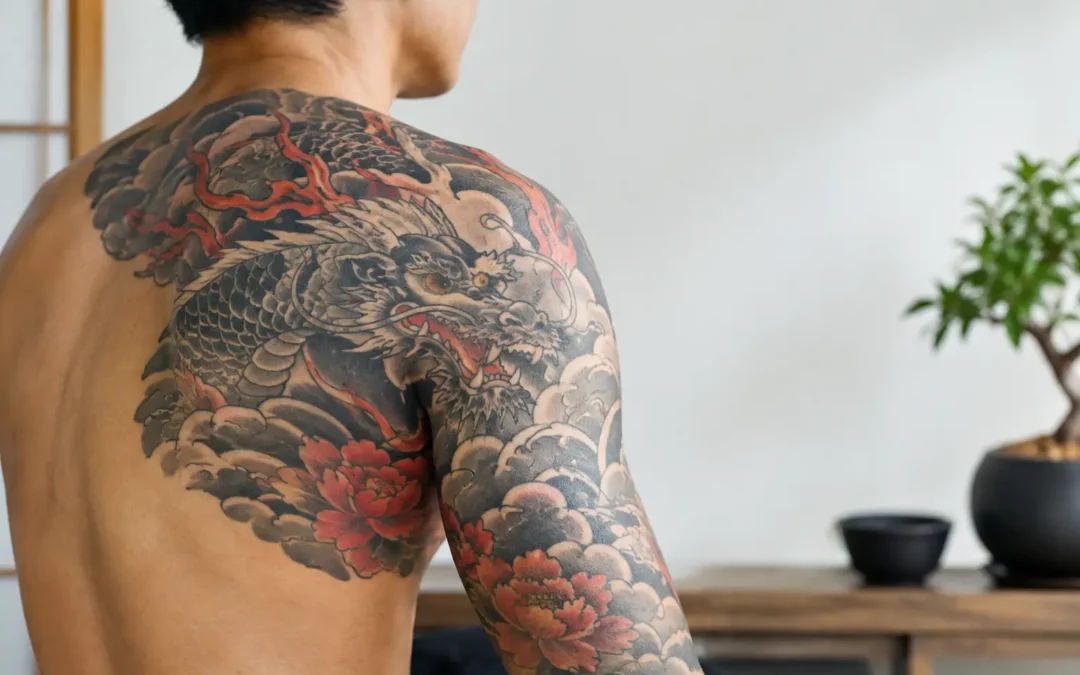
Japanese tattooing is built for more than a quick symbol on the skin. A strong guide to Japanese tattoo motifs starts with the idea that each figure, flower, wave, and background element has a role in a larger composition. Whether you are planning a small design or a full sleeve, the goal is artwork that feels intentional from every angle – not a collection of unrelated images.
For clients drawn to Japanese-inspired tattoos, the most rewarding process begins with meaning, placement, and flow. The right motif matters, but so does how an artist designs it to move with your body. That is where custom work separates a lasting tattoo from a design that simply looks good in a reference photo.
What Defines Japanese Tattoo Motifs?
Traditional Japanese tattoo imagery, often associated with irezumi or wabori, draws from folklore, religion, nature, theater, and centuries of visual art. Many motifs are recognizable on their own, but they are traditionally designed in relationship with seasonal flowers, wind bars, clouds, waves, rocks, and other background elements.
That visual relationship is the difference. A dragon on a bare field of skin can be powerful, but a dragon woven through clouds, smoke, or water has movement, scale, and a clearer story. A koi swimming upstream gains energy when the current follows the arm or calf. Japanese-inspired tattooing rewards planning because the composition is often as meaningful as the main subject.
It also helps to be precise with language. Not every tattoo using a koi, chrysanthemum, or dragon follows the conventions of traditional Japanese tattooing. A custom artist may create a Japanese-inspired piece using those references while adapting line weight, color, negative space, or realism to suit your personal style. Neither approach is automatically better. What matters is being clear about the visual direction you want and respecting the source material rather than treating it as decoration without context.
The Most Recognizable Japanese Tattoo Motifs
Dragons: Wisdom, Power, and Protection
Japanese dragons, or ryū, are commonly portrayed as intelligent, powerful beings connected to water, rain, and the heavens. They are visually different from many Western dragons: long, serpent-like bodies, scaled detail, whiskers, claws, and expressive faces create a sense of movement that works exceptionally well across the back, chest, arm, or leg.
A dragon can communicate protection, wisdom, strength, or personal transformation, depending on the design and the wearer’s connection to it. Direction matters visually, too. The curve of the body should follow the anatomy rather than fighting it. On a sleeve, the dragon may wrap around the arm so its head and face remain visible from the strongest viewing angle.
Koi: Perseverance With Direction
Koi are among the most requested Japanese tattoo motifs because they carry a clear message without feeling generic. They are often associated with perseverance, courage, and the ability to push through adversity. The familiar symbolism comes from the story of koi swimming upstream and transforming after reaching the Dragon Gate.
The direction of the koi is frequently discussed in tattoo planning. A koi swimming upstream can represent the struggle, ambition, or work still underway. A downstream koi may represent having overcome an obstacle or moving with greater peace after the fight. This is not a rule you have to follow, but it gives clients a meaningful starting point.
Koi work best when the water has room to move. A forearm, calf, thigh, or sleeve gives an artist enough space to build currents, splashes, and negative space around the fish. Color can be bold and traditional, while black and grey can make the scales, water, and contrast feel more dramatic.
Tigers: Courage and Controlled Strength
The tiger, or tora, is a commanding choice for clients who want a design with energy and attitude. In Japanese art, tigers are often linked to courage, protection, and the ability to drive away misfortune. Their striped bodies also give artists a strong opportunity to create contrast and movement.
A tiger is especially effective on a limb because its body can bend, climb, crouch, or turn with the natural shape of the area. Pairing a tiger with wind, bamboo, rocks, or clouds can help establish a setting while keeping the design focused. The expression is crucial here. A well-drawn tiger should feel alive and intentional, not like a copied animal image dropped onto the skin.
Snakes: Renewal, Protection, and Mystery
Snakes, or hebi, have a natural advantage in tattoo composition: their bodies can travel through a sleeve, around a leg, or across the ribs with ease. In Japanese imagery, they may be associated with protection, healing, wisdom, and renewal through shedding skin.
Because snakes can be designed in many ways, they offer range. A large serpent can become the central figure in a full sleeve, while a smaller snake wrapped around a flower can make a focused standalone piece. The trade-off is detail. Tight placements may limit how much scale work, background, and facial character can be included without the design becoming crowded over time.
Oni and Hannya: Emotion With Depth
Oni are fearsome demons from Japanese folklore, while Hannya masks represent a woman transformed by overwhelming jealousy, grief, or rage in Noh theater. Both are visually striking, but their meanings should not be treated as interchangeable.
An oni can represent confrontation with chaos, a guardian force, or the darker side of human nature. A Hannya mask often speaks more directly to intense emotion, heartbreak, and transformation. These designs can be bold, expressive, and deeply personal, especially when built around a story the client wants to carry forward. Their faces must be handled carefully: placement, angle, and the flow of the eyes and horns can make or break the finished piece.
Flowers: The Mood and Season of the Tattoo
Flowers are not filler in Japanese tattooing. They establish season, create contrast, and change the emotional tone of a larger piece. Cherry blossoms suggest impermanence and the brief beauty of life. Peonies are often associated with prosperity, elegance, and bravery. Chrysanthemums can represent longevity and endurance, while lotus flowers are tied to growth and rising through difficult circumstances.
The flower you choose should work with the main image as well as your personal story. A client may love cherry blossoms visually, but a chrysanthemum may better support the message of a tiger or dragon composition. This is the kind of decision that becomes clearer during a real design consultation, where the artist can show how each element affects the overall balance.
Background Is Part of the Design
One of the biggest mistakes people make when planning Japanese-inspired tattoos is treating the background as an afterthought. Water, clouds, wind bars, smoke, maple leaves, rocks, and waves create the motion that ties everything together. They also give the tattoo room to breathe.
Background choices should support the subject. Water naturally complements koi, dragons, and some snake designs. Wind and clouds can amplify a tiger or bird. Floral elements can mark a season or soften the intensity of an oni mask. A good artist uses these features to connect sections of a sleeve or body panel without making every inch equally dark or busy.
Negative space matters just as much. Skin breaks provide contrast, improve readability, and help the main figure hold up as the tattoo ages. A sleeve packed edge to edge with tiny details may look impressive on day one, but a balanced composition usually has more staying power.
Choosing Placement and Color
Japanese tattoo motifs often look their best when the placement gives them room to move. Sleeves are popular because they allow a narrative to wrap around the arm. Back pieces offer the largest canvas for dragons, warriors, tigers, and scenes with multiple figures. Thighs, calves, and chest panels can also carry strong designs without committing to a full body suit.
Color is a personal and artistic decision. Traditional-inspired palettes may use rich reds, golds, greens, blues, and black for contrast. Full color can bring flowers, koi, and masks to life, while black and grey can emphasize texture, form, and dramatic shading. Neither is a lesser version of the other. The best choice depends on the motif, your existing tattoos, your skin tone, and how much visual impact you want from a distance.
For a smaller tattoo, simplify. A single flower, mask, snake, or koi can be designed beautifully at a modest scale. Trying to force a complete dragon, heavy background, multiple flowers, and tiny lettering into a small forearm space usually weakens the design. Give the artwork enough room to be read clearly.
Bring the Idea, Then Trust the Process
Reference images are useful for showing an artist what you respond to: a dragon’s expression, a certain wave style, a color palette, or the placement of a koi. They should not become a blueprint for copying someone else’s tattoo. Your artist’s job is to translate those references into original work that fits your body and your story.
At Socrates Ink Gallery, a custom consultation is where the strongest ideas take shape. Bring your favorite motifs, explain what they mean to you, and be open about scale, budget, and the level of commitment you want. An artist can then help you decide whether the idea needs a focused standalone piece, a sleeve foundation, or a long-term plan built in sessions.
Choose the image that keeps calling you back, give it the space it deserves, and let the final design become art that feels personal long after the appointment is over.