
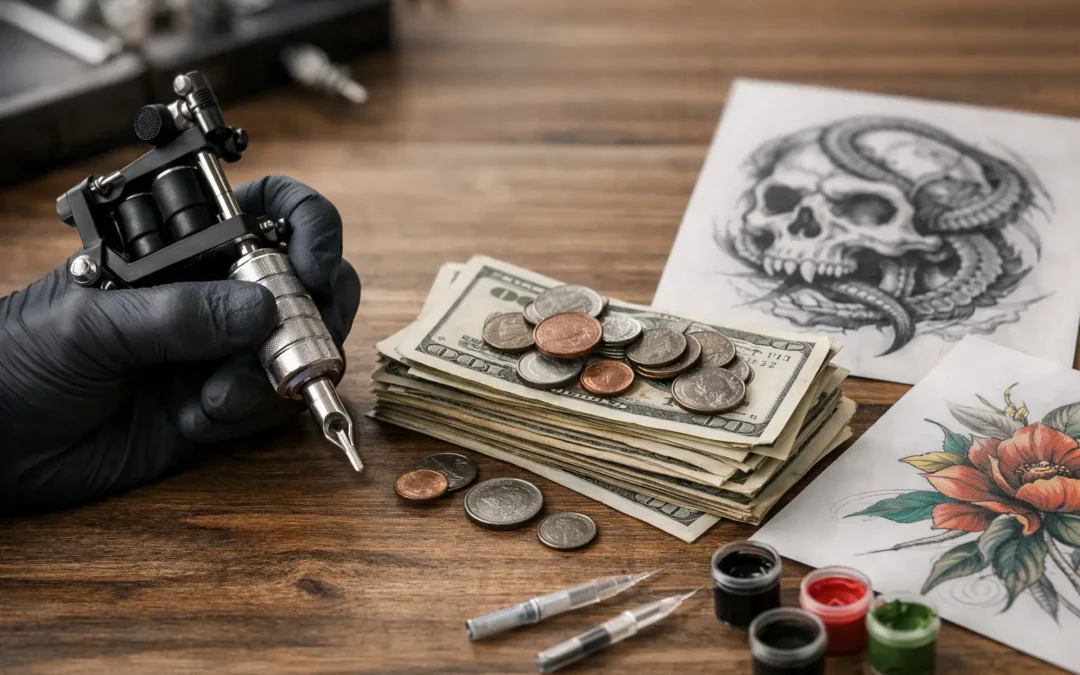
A tattoo starts long before the machine turns on. It starts with the conversation, the reference photos, the placement, and the artist translating a personal idea into art that works on your body. So, how much do tattoo designs cost? The honest answer is that it depends on whether you are paying for a standalone design, a custom tattoo project, or both.
For many custom tattoos, the design process is included in the artist’s rate, session minimum, or deposit. For more involved work, especially a sleeve, cover-up, portrait, or Japanese-inspired piece, design time may carry a separate fee or require a larger deposit. The right question is not just, “What does the drawing cost?” It is, “What level of artistic planning does this tattoo need to look right for life?”
How Much Do Tattoo Designs Cost?
A simple custom tattoo design may be included with your appointment deposit, while a detailed original concept can range from roughly $50 to several hundred dollars before tattooing begins. The range is wide because tattoo design is not a one-size-fits-all product.
A small fine-line tattoo based on a clear idea may need limited drawing time. A custom black and grey portrait, a full-color back piece, or a cover-up requires significantly more planning. The artist may need to reshape the composition around existing ink, test color choices, adjust the design to the flow of the body, and make sure details will remain readable as the tattoo ages.
At a professional custom studio, you are paying for more than a digital sketch. You are paying for an artist’s eye, technical judgment, and the ability to turn a concept into a tattoo that fits the skin, the placement, and the person wearing it.
Design Fee, Deposit, and Tattoo Price: What Is the Difference?
These terms are often used interchangeably, but they can mean different things. Asking for clarity before booking prevents surprises and helps you budget with confidence.
A consultation is the planning conversation. Some artists offer it at no charge, while others apply a consultation fee for extensive project planning. This is where you discuss style, placement, size, references, budget, and any concerns about pain, healing, or prior tattoos.
A deposit reserves your appointment time and shows that both you and the artist are committed to the project. In many studios, the deposit is applied toward the final tattoo cost. Deposits are commonly nonrefundable because the artist may begin drawing, researching, and preparing specifically for your appointment.
A design fee pays for the artwork development itself. It is most common when the project needs substantial creative work, several design revisions, a highly detailed composition, or a drawing that is being purchased separately from the tattoo appointment. Depending on studio policy, that fee may or may not be credited toward the tattoo.
The tattoo price covers the application session or sessions. It reflects the artist’s time, experience, the complexity of the work, studio overhead, sterile single-use supplies, equipment, and the skill required to execute the piece cleanly.
What Makes a Custom Tattoo Design Cost More?
Size matters, but it is not the whole story. A small tattoo can be more demanding than a larger one when it includes a detailed portrait, ornate lettering, precise geometry, or a complicated cover-up plan.
Style is a major factor. Fine-line work calls for restraint and accuracy because there is little room to hide uneven lines. Realism and portrait tattoos require careful reference selection, contrast planning, and strong technical control. Full-color designs take time to map out color relationships and may require more than one session to apply. Japanese-inspired projects often involve larger compositions with elements that need to move naturally with the arm, leg, chest, or back.
Placement affects the design, too. A drawing that looks balanced on paper can look completely different once it wraps around a forearm or follows a shoulder blade. Experienced artists build the body’s shape into the artwork rather than forcing a flat image onto curved skin.
Cover-ups deserve special mention. The goal is not simply to place a new image over old ink. A successful cover-up accounts for the darkness, shape, color, and location of the existing tattoo. That often means a larger design, stronger contrast, or a concept tailored specifically to disguise what is underneath. More strategy usually means more drawing time.
When a Separate Design Fee Makes Sense
Not every tattoo needs an additional design charge. If you are choosing a simple flash-style piece, making a minor adjustment to an existing design, or booking a small tattoo with straightforward placement, the artist may include the preparation in the appointment cost.
A separate fee makes more sense when the design is a major creative project. Think of a full sleeve built around a personal story, a large-scale religious or mythological scene, a custom portrait composition, or a cover-up that needs several concepts before the right solution appears.
It can also make sense if you want to purchase original artwork without committing to a tattoo session right away. Be aware, though, that many tattoo artists do not sell or release custom designs separately. Their drawings are created for their clients and for tattoo application, not for someone else to take to another artist. That policy protects both the artist’s work and the integrity of the final tattoo.
How to Get an Accurate Quote Before You Book
The best quotes come from clear information. Bring a few reference images that show the style, mood, or subject you like, but do not expect an artist to copy another person’s tattoo exactly. References are a starting point. The final artwork should be made for you.
Know where you want the tattoo and be open to advice about size. Clients often choose a size based on what feels manageable, then learn that the idea needs more room to stay clear over time. A professional artist will explain the trade-off honestly. Going smaller may lower the upfront cost, but it can limit detail and affect how the tattoo ages.
Share your budget early. This does not mean asking an artist to cut corners. It means giving them the information needed to recommend an approach that works. You may decide to simplify the concept, start with one section of a larger project, choose black and grey over full color, or schedule the work in sessions.
During a consultation, ask whether the deposit applies to the tattoo, whether drawing time is included, how revisions are handled, and whether the estimate is hourly, session-based, or quoted by project. You should also ask what happens if the design changes significantly after the artist has started preparing it.
Why the Cheapest Design Is Rarely the Best Value
A tattoo design is the blueprint for permanent work. Saving money by rushing the planning stage can lead to compromises that cost more later, especially if the result needs a cover-up or removal.
That does not mean every tattoo needs a huge budget. A meaningful, well-executed small tattoo can be a great choice. It means the price should match the level of customization, detail, and skill the project requires. Clean lines, thoughtful placement, readable details, and a design that feels like yours are worth protecting.
At Socrates Ink Gallery, the process is built around listening first, then creating a tattoo design that makes sense for your idea and your skin. Whether you are planning your first fine-line piece or building a large custom project, a consultation gives you a realistic picture of the design work, timing, and investment involved.
Your tattoo does not need to be the biggest or most expensive piece in the room to matter. Give the idea enough time, choose an artist whose work you trust, and let the design be made for the person who will wear it.