
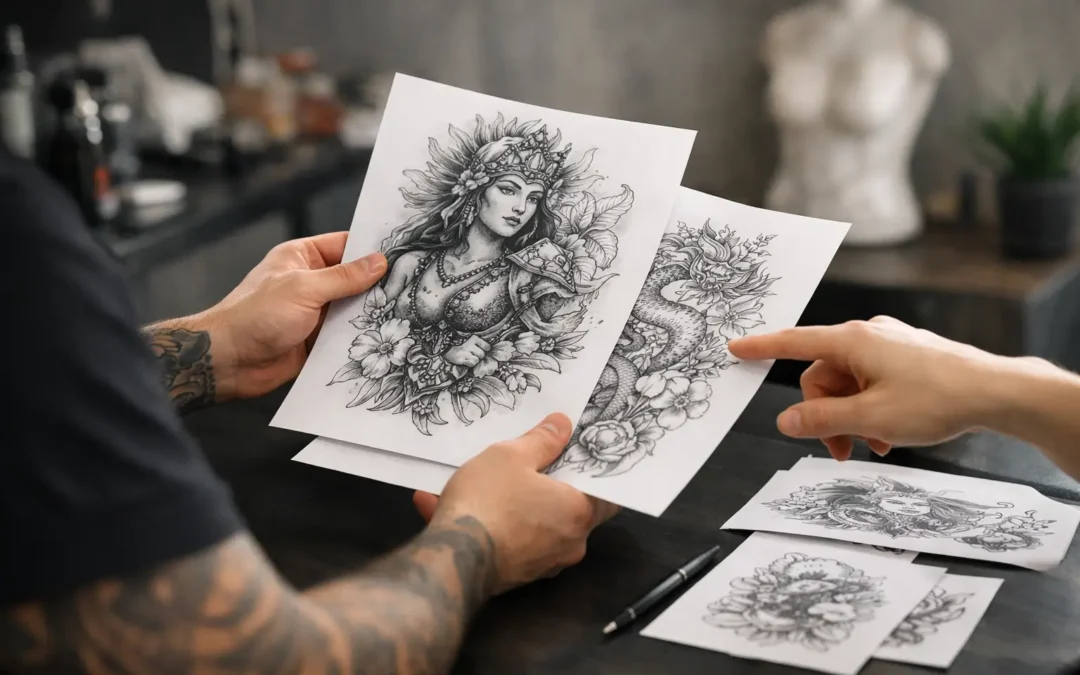
A tattoo can begin with a single reference photo, a name, a memory, or a rough idea that is hard to explain. What is a custom tattoo design? It is original artwork created by a tattoo artist for you, with your story, body, style, and long-term wear in mind. It is not simply an image pulled from the internet and placed on skin.
A strong custom tattoo feels personal without needing to explain itself to everyone who sees it. It should work with the shape of your body, read clearly from the right distance, and hold up as the years pass. That balance is where professional artistry matters.
What Makes a Tattoo Design Custom?
A custom design is developed through collaboration. You bring the meaning, references, preferred style, placement, and overall feeling. The artist brings design experience, technical knowledge, and an honest understanding of what will translate well into a tattoo.
The finished piece may include familiar elements – roses, lions, skulls, religious imagery, Japanese-inspired motifs, portraits, lettering, or family symbols – but the composition is built specifically for your project. The artist considers how those elements relate to one another rather than treating them like separate clip-art images.
Custom does not always mean starting with a completely blank page. You may show your artist photos, artwork, tattoos you admire, colors you like, or even a saved collection of ideas. Those references are useful direction. They should inspire the design, not become a copy of someone else’s tattoo.
That distinction protects both the client and the craft. Your tattoo should feel like yours, and another person’s permanent artwork should remain theirs.
A Custom Tattoo Is Designed for Your Body
Skin is not paper. It moves, curves, stretches, and changes with the placement. A design that looks balanced in a square image online may feel cramped on a forearm, disappear around an elbow, or lose impact across the shoulder.
This is one of the biggest differences between custom work and a generic design. A tattoo artist adjusts scale, flow, contrast, and detail to fit the area you have chosen. A snake may wrap naturally around the arm. A floral piece may follow the shoulder line. A portrait may need more room than expected to preserve expression and realism.
Placement can also change the best approach to style. Fine-line work can be elegant and subtle, but very tiny details may soften over time. Black and grey tattoos can create depth through smooth shading and strong contrast. Full-color work may call for bolder outlines and intentional color choices so the piece remains readable as it heals and ages.
A good artist will not promise that every idea works at every size or on every part of the body. That is not a lack of creativity. It is professional guidance designed to give you a better tattoo.
Size and Detail Have to Work Together
Clients often come in with meaningful ideas that contain a lot of information: a skyline, several family dates, a portrait, a quote, flowers, and symbolic objects. All of that may be possible, but the tattoo needs enough space for the details to breathe.
When a design is made too small, lines can crowd together and shading can become muddy over time. Sometimes the right answer is to simplify the concept. Other times, it is to expand the placement or build the tattoo as part of a larger sleeve, back piece, or leg project.
The goal is never to add detail just because it can be added. The goal is to make every element count.
The Custom Tattoo Design Process
Custom tattooing is a process, not a quick transaction. It begins with a conversation that helps the artist understand what matters most to you. Is the tattoo about a person, a milestone, heritage, a favorite visual style, or simply the desire to wear striking original art? The answer shapes the design.
During a consultation, expect to discuss placement, approximate size, reference images, budget, timing, and any existing tattoos in the area. If you are planning a cover-up, the artist also needs to assess the old tattoo in person. Cover-ups require strategic use of shape, darkness, texture, and color. They cannot be planned honestly from a vague description alone.
After the consultation, the artist develops the artwork. Depending on the project, you may see a full drawing before the appointment or review the design on the day of your session. Studios handle this differently, especially when they protect the time and original creative work involved in large custom projects.
What should always happen is a clear opportunity to discuss the design before tattooing begins. You should feel comfortable asking about placement, scale, a particular element, or the reasoning behind an artistic choice. Trust the process, but stay part of it.
Revision Is Part of Collaboration
Custom design does not mean unlimited redesigns until every detail matches a mental image exactly. Tattoo artists are artists, not printers. Their value is in interpreting the idea and building a tattoo that works.
That said, reasonable revisions are a normal part of a healthy collaboration. Perhaps a flower needs to be changed, a date needs to be corrected, or the composition needs a stronger focal point. Share those concerns early, clearly, and respectfully.
The best results come when clients communicate the non-negotiables first. If a specific face, symbol, or phrase must be included, say so at the consultation. If you care more about the mood than exact objects, give the artist creative room to lead.
Custom Tattoo vs. Flash Tattoo
Flash tattoos are pre-drawn designs that an artist can tattoo more than once or offer as a limited selection. They can be beautiful, efficient, and a great choice for a walk-in appointment. Flash is not lesser work. It simply serves a different purpose.
A custom tattoo is built around your specific request. It typically takes more planning and may require more time before the tattoo appointment, particularly for a sleeve, portrait, cover-up, or detailed Japanese-inspired composition.
The choice depends on what you want. If you love a flash design exactly as it is, there is no reason to force it into a custom project. If you want artwork connected to your life, fitted to a particular placement, or designed to work around existing tattoos, custom is often the better route.
How to Prepare for a Custom Design Consultation
Come prepared, but do not feel pressure to arrive with a finished design. A few good references and a clear explanation are more valuable than a crowded collage of unrelated images.
Be ready to explain the subject matter you want, the styles you are drawn to, the body area you have in mind, and the size range you can commit to. Mention whether you want black and grey, color, fine line, realism, Japanese-inspired imagery, or something else. If you have a firm budget or deadline, be direct about that too.
It also helps to say what you do not want. Maybe you want a wolf tattoo without blue eyes, a memorial piece without obvious angels, or a floral design that feels bold rather than delicate. Clear boundaries help an artist create something aligned with your taste.
At Socrates Ink Gallery, the consultation is where ideas become a real plan. Whether you are considering a first tattoo or a large-scale piece, the focus is on creating artwork that fits your vision while respecting the standards of lasting tattoo design.
Why Choosing the Right Artist Matters
Not every tattoo artist specializes in every style. A great portrait artist may approach a fine-line botanical tattoo differently than an artist known for traditional work. Review an artist’s healed work, line quality, shading, color saturation, and examples similar to the tattoo you want.
You should also pay attention to the studio experience. Original art deserves a clean, professional setting with proper hygiene practices, clear communication, and enough time to do the work right. Comfort matters, especially when the project involves multiple sessions.
A custom tattoo is a commitment, but it should also be an exciting one. Bring the story, the reference, or the half-formed idea. The right artist can turn it into artwork that belongs on your skin, not just on a screen.