
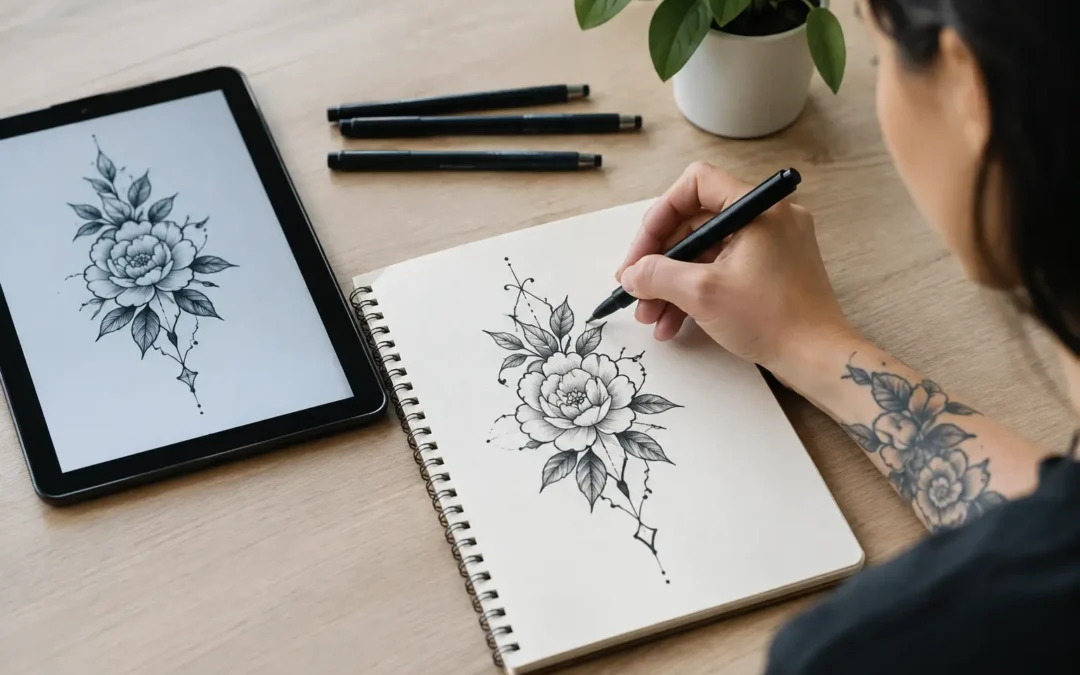
A tattoo idea can begin with something as small as a song lyric, a family memory, a favorite animal, or a symbol you keep sketching in the margins. But skin is not a notebook page. When you learn how to design your own tattoo, the goal is not to create a finished drawing alone. It is to arrive with a clear personal direction that gives your artist the right material to turn into artwork built for your body.
The strongest tattoos do more than look good on a screen. They fit the placement, hold their detail over time, and still feel like you years from now. Trust the process: bring the meaning, references, and honest preferences. Let a professional tattoo artist shape those pieces into a design that can live well on skin.
Start With the Story, Not the Image
Before collecting reference photos, get specific about why this tattoo matters. You do not need a dramatic life story for every piece, but you should know what draws you to it. Is it a reminder of a person, a milestone, your heritage, or simply an aesthetic you have loved for years?
Write down a few words that define the feeling you want: protective, calm, bold, nostalgic, mysterious, playful, disciplined. This is more useful than telling an artist, “I want something cool.” A raven can become dark and gothic, elegant and fine-line, or graphic and traditional depending on the feeling behind it. Your meaning gives the design a point of view.
If the tattoo is purely visual, that is valid too. Great tattooing is art, and sometimes the right reason is that you want exceptional art on your body. Be honest about that. It helps the design stay focused instead of forcing a symbolic explanation that does not fit.
How to Design Your Own Tattoo With References
Reference images are a starting point, not a stencil. Save examples that show what you respond to, then look closely at why you saved them. Maybe you like the movement in one Japanese-inspired dragon, the contrast in another black and grey piece, and the placement of a third tattoo. Those observations are what an artist can use.
Bring a small, edited group of references rather than fifty unrelated screenshots. Include inspiration from outside tattooing as well: an old botanical print, a photograph, a piece of architecture, fabric patterns, an album cover, or a family object. These can make a custom concept feel personal without asking an artist to copy someone else’s tattoo.
Avoid presenting another person’s finished tattoo as the exact design you want. A custom tattoo should be made for your story and your anatomy. Copying a tattoo also ignores the decisions that made it work for someone else’s skin tone, body shape, and placement. The better request is: “I like the line weight, mood, and composition here, but I want an original piece built around my idea.”
Choose Placement Before Chasing Tiny Details
Placement changes everything. A design that looks perfect as a square graphic may need to stretch, curve, or simplify on the body. A forearm has a long vertical flow. A shoulder cap calls for a rounded composition. The ribs, spine, thigh, calf, hand, and chest all ask the artist to think differently about movement, visibility, and scale.
Consider how often you want to see the tattoo and how public you want it to be. A small wrist design can be meaningful because it is always in view, while a larger thigh or back piece creates more room for detail and privacy. Career considerations, clothing, sun exposure, and lifestyle all deserve an honest place in the decision.
Size is where many first-time clients need the most guidance. Very small tattoos cannot carry every detail. Fine lines can be beautiful, but a tiny portrait, a long quote in miniature lettering, or a detailed landscape compressed into a few inches may blur or lose clarity as the tattoo ages. Going slightly larger or simplifying the subject is often the choice that protects the design.
Match the Style to the Subject
Tattoo style is not just decoration. It affects readability, healing, longevity, and the emotional impact of the artwork. A delicate flower might suit fine-line work, while a bold animal head may need stronger contrast and larger shapes. A portrait calls for an artist with portrait experience. A cover-up needs a different strategy than a tattoo on clear skin.
Black and grey work can create depth, texture, and a classic appearance. Full color can make a piece feel vivid and expressive, but color choices should complement your skin tone and the tattoo’s location. Japanese-inspired work often relies on intentional background, flow, and larger compositions, so it may be better planned as part of a sleeve or larger panel rather than as an isolated image.
Do not choose a style only because it is popular right now. Trends can be fun, but a tattoo lasts longer than a social media cycle. Ask yourself whether you would still connect with the subject if the trend disappeared. If the answer is yes, you are on solid ground.
Build a Clear Design Brief for Your Artist
You do not need to be good at drawing to communicate a strong idea. A useful design brief can be short. Explain the subject, intended placement, approximate size, preferred style, and what you do not want. Mention whether the tattoo needs to connect to existing work or leave space for future pieces.
For example: “I want a black and grey memorial tattoo for my grandfather on my outer forearm, around six inches tall. I would like his pocket watch included, but I do not want a realistic face. I want it to feel classic, not overly dark.” That gives an artist enough direction to begin making thoughtful choices.
Be open about your budget and timeline as well. Larger custom work may need multiple sessions, especially sleeves, portraits, detailed color pieces, and cover-ups. A professional artist can recommend the best way to phase the project without compromising the final result.
Let the Consultation Improve the Concept
A consultation is where your idea becomes a tattoo plan. The artist will consider the design’s flow, line weight, contrast, size, and technical requirements. They may recommend changing a detail, shifting the placement, or building a background around the main subject. That is not a rejection of your vision. It is the design process doing its job.
The best collaboration has room for feedback, but it also requires trust. You are the expert on the personal meaning. Your artist is the expert on translating that meaning into skin art. If a requested element will not read clearly or will interfere with the composition, listen to the explanation and ask about alternatives.
At Socrates Ink Gallery, custom work is approached as a conversation between your vision and the artist’s craft. Whether you arrive with a complete concept or only a feeling and a few reference images, the goal is the same: create original work that belongs on you.
Think Beyond the Appointment Day
A tattoo design should account for the life it will have after it heals. Sun exposure can fade ink over time, especially in bright Florida weather. High-friction areas may wear differently. Significant weight changes, skin texture, and aging can affect some placements more than others. None of this should stop you from getting the tattoo you want, but it should inform smart design choices.
Ask how the artist expects the piece to age and what aftercare will protect it during healing. A clean, professional environment and careful aftercare are part of the artwork, not separate from it. A beautiful tattoo deserves the same attention after the appointment as it received during design.
Your tattoo does not need to explain itself to everyone who sees it. It only needs to feel intentional when you look at it. Bring the story, choose the placement with care, and give your artist room to create. The result can be more than an image you liked for a moment – it can become a piece of art you are proud to wear for years.