
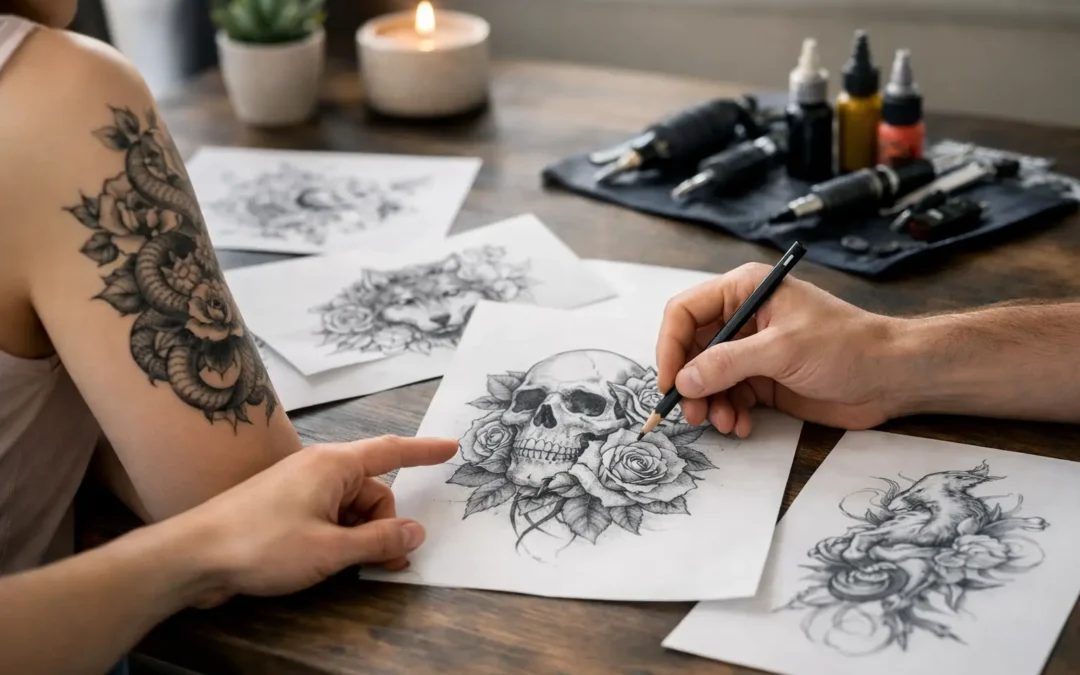
A custom tattoo should not feel like something pulled from a wall, copied from a search result, or rushed into existence because you found an open appointment. It should feel like yours. The best answer to how to get custom tattoo design work is to arrive with a real point of view, then trust a qualified artist to turn that starting point into artwork built for your skin, placement, and future.
That does not mean you need to walk in with a finished drawing. In fact, a strong custom tattoo often begins with a feeling, a memory, a subject, or a few visual references. Your job is to communicate what matters. Your artist’s job is to make it tattooable, balanced, and original.
Start With the Meaning, Not the Exact Image
Clients sometimes come in looking for an artist to reproduce a Pinterest image line for line. That approach can create problems. The image may have been designed for someone else’s body, may not age well at the requested size, or may simply not reflect your own story. More importantly, copying another person’s tattoo misses the value of commissioning custom art.
Start by identifying the core of the idea. Maybe you want to honor a family member without using a literal portrait. Maybe a Japanese-inspired sleeve represents resilience, or a black-and-grey piece captures a chapter of your life. Perhaps you want a fine-line tattoo that feels quiet and personal rather than bold and obvious.
Give your artist the meaning behind the tattoo, the mood you want, and the elements you are drawn to. A few well-chosen references can help communicate direction. They should show style, composition, texture, color palette, or subject matter, not become a blueprint for a duplicate.
For example, you might say you like the movement of a koi fish, the contrast of black-and-grey shading, and the way flowers can frame an arm. That gives the artist room to create a composition that belongs on your body and is not a copy of someone else’s work.
Choose an Artist for the Style You Want
Custom design is a collaboration, but not every artist is the right collaborator for every concept. Before booking, look closely at an artist’s healed work, not only fresh tattoos. Study the consistency of their linework, shading, color saturation, and compositions across different placements.
If you want a realistic portrait, choose an artist with a portfolio that proves they can handle facial proportions, smooth value changes, and expressive detail. For a full-color tattoo, look for clean color packing and strong contrast. For fine-line work, evaluate whether lines remain deliberate and readable rather than faint or uneven. If you are planning a sleeve, pay attention to how the artist connects separate elements into a complete flow.
This is also where experience matters for cover-ups. A cover-up is not simply a new image placed over an old one. The existing tattoo’s darkness, shape, color, and placement affect what can realistically be created. A good artist will be honest if the concept needs to be larger, darker, or adjusted to cover effectively. That honesty protects the result.
Prepare for the Consultation
A consultation is where a loose idea becomes a real project. Bring your references, but keep the conversation focused. Explain the story, the placement you are considering, your preferred style, and whether you want black and grey or color. Mention details you definitely want included and details you do not want.
It also helps to share practical information. Is this your first tattoo? Do you have a firm budget or timeline? Are you planning to expand the design into a larger piece later? A small tattoo on the forearm can be designed differently if it may eventually become part of a sleeve.
Be open about uncertainty, too. You do not need to pretend you have every answer. A professional artist can help you compare placements, scale the design properly, and decide whether your concept needs more room to breathe. A delicate design may look beautiful at first when it is too small, but details can soften over time. On the other hand, making every tattoo large is not the answer. The right size depends on the amount of detail, the body area, and the visual impact you want.
Questions Worth Asking
Ask how the artist approaches original design, when you will review the drawing, and what changes can be discussed before tattooing begins. Ask whether the requested placement will distort with movement or require a different composition. If you are considering color, ask how your skin tone, sun exposure, and lifestyle may affect the final look over time.
You should also ask about session planning for larger work. A full sleeve, back piece, or detailed portrait may need multiple appointments. Knowing that up front allows you to plan financially and physically rather than treating a major project like a quick service.
Give Clear Feedback Without Controlling Every Line
The design review is your opportunity to make sure the tattoo reflects your vision. Look at the overall composition first. Does the piece have the right energy? Does it fit the placement? Is the main subject clear from a normal viewing distance?
Then move into details. You may want a flower changed, a date removed, a face softened, or a background element simplified. Those are useful notes. Vague feedback such as make it better is harder to act on, while a specific comment like I want the roses to feel less traditional and more botanical gives the artist meaningful direction.
At the same time, avoid trying to art-direct every millimeter. Tattoo artists understand how a design will wrap around a shoulder, taper along a forearm, or sit on a calf. They know which small gaps will preserve readability and which tiny details will turn muddy over time. You are not giving up control by trusting that expertise. You are protecting the tattoo from choices that look good on a phone screen but fail on skin.
A custom tattoo design may change between the first conversation and the final stencil. That is normal. The goal is not to force the first idea to survive unchanged. The goal is to arrive at the strongest version of it.
Think About Placement Before You Commit
Placement changes the entire design. A symmetrical chest piece, a vertical forearm tattoo, and a curved shoulder composition each call for different proportions. Even a simple word or symbol needs to be sized and positioned with movement, visibility, and aging in mind.
Consider how often you want to see the tattoo, whether your work environment affects placement, and how the area feels during tattooing. Ribcage, feet, hands, neck, and inner-arm tattoos can require different levels of pain tolerance and aftercare attention. That should not stop you from choosing a meaningful placement, but it should be part of an informed decision.
For larger custom work, think beyond the first session. Leaving intentional space can make future additions look planned instead of crowded. This matters especially for collectors building sleeves, leg projects, or connected black-and-grey work over time.
Respect the Design and the Process
A custom drawing represents real design time, artistic judgment, and preparation. Once you have chosen your artist, avoid shopping their concept around to other studios or asking someone else to reproduce it for less. If budget is a concern, talk openly about simplifying the design, choosing a smaller placement, or breaking a larger tattoo into sessions.
Do not rush the appointment because of a vacation, event, or social media deadline. A tattoo is permanent artwork. It is worth taking the extra time to get the scale, composition, and execution right. Arrive rested, hydrated, and ready to follow the artist’s preparation and aftercare instructions. The design is only one part of the final result. Healing well protects the work you invested in.
Turn Your Idea Into Artwork You Can Stand Behind
The most successful custom tattoos are not built from a perfect reference image. They come from an honest idea, a skilled artist, clear communication, and enough patience to let the design become what it needs to be. Whether you are planning a first tattoo, restoring confidence with a cover-up, or committing to a full sleeve, the process should leave you feeling heard and confident.
At Socrates Ink Gallery, the conversation begins with your vision and ends with artwork made to live on your skin. Bring the story, the inspiration, and the questions. Trust the process, give the design room to develop, and choose art you will be proud to wear long after the appointment is over.