
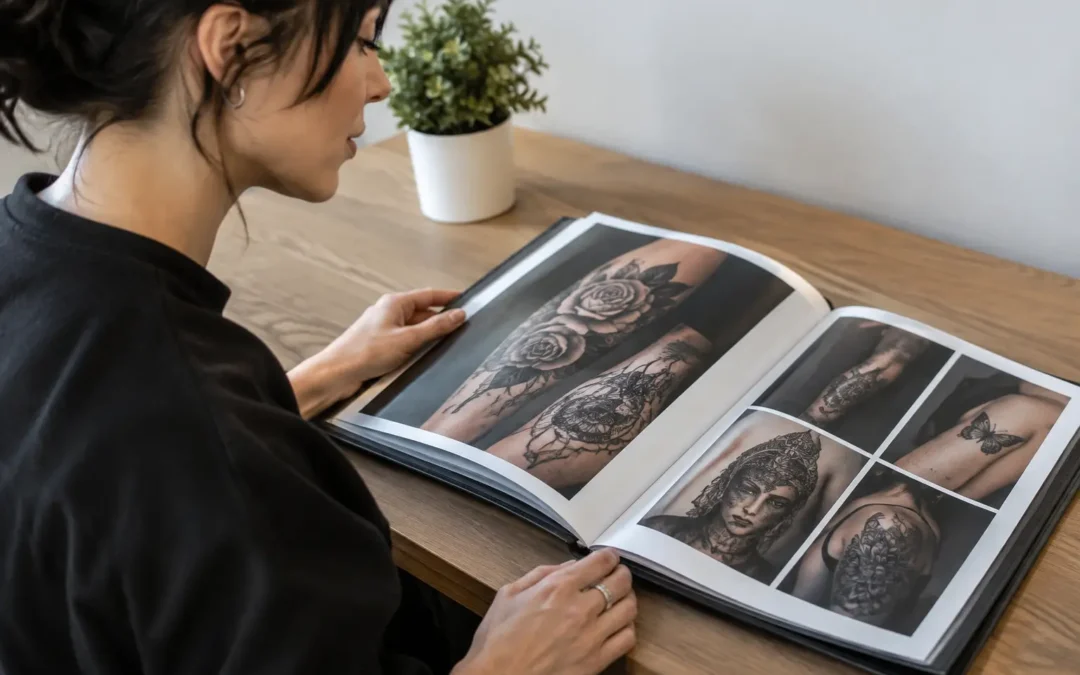
A tattoo portfolio is more than a collection of good-looking photos. It is the closest view you can get of an artist’s decision-making before you sit down for a consultation. When you review tattoo artist portfolios with a trained eye, you can see whether an artist’s style, technical control, and approach truly fit the piece you want to wear for life.
The goal is not to find the artist with the most posts or the flashiest feed. The goal is to find someone whose work makes you feel confident about your specific idea – whether that means a fine-line memorial, a full-color sleeve, a black-and-grey portrait, a Japanese-inspired back piece, or a cover-up with real planning behind it.
Start With the Style You Actually Want
The first question is simple: does the portfolio show work that looks like the tattoo you have in mind? Artists can be talented and still not be the right fit for every project. A strong portrait artist may not be the best choice for a delicate botanical fine-line design. An artist known for bold color saturation may approach a subtle black-and-grey piece differently than you expect.
Look beyond the subject matter. A rose is not just a rose, and a tiger is not just a tiger. Pay attention to how the artist uses contrast, line weight, shading, color, negative space, and composition. If you want a realistic portrait, look for portraits with natural facial structure, clear features, and smooth value transitions. If you want Japanese-inspired work, look for movement, background flow, strong placement, and imagery that feels composed for the body rather than copied onto it.
A portfolio does not need to contain your exact idea for an artist to be a fit. In fact, custom tattooing should not be built around repeating the same design. What matters is evidence that the artist understands the visual language you are drawn to and can translate your concept into original skin art.
What Strong Tattoo Artist Portfolios Show
A polished finished photo can be impressive, but it should not be the only thing you see. Strong tattoo artist portfolios show consistency across different clients, body placements, skin tones, and project sizes. One exceptional piece proves potential. Consistent work proves reliability.
Study the lines first. They should look intentional, clean, and appropriate for the style. Fine-line tattoos require control without making lines so faint that the design loses definition. Bold traditional or illustrative work needs confident line weight that supports the image over time. In black-and-grey work, look for smooth shading alongside enough contrast to keep the tattoo readable from a normal viewing distance.
Color work deserves its own close look. Saturation should appear deliberate rather than muddy, and neighboring colors should remain distinct where the design calls for separation. Bright color is not automatically better. Some designs need soft blends or muted tones. The question is whether the artist controls color in a way that supports the composition.
Also look at the full tattoo, not just close-up details. A clean eye in a portrait means little if the overall head shape is distorted. A beautifully rendered flower can still feel misplaced if it fights the shape of the arm. Great tattooing considers the body as part of the canvas. It should flow with muscle, joints, curves, and the amount of space available.
Healed Work Tells a More Complete Story
Fresh tattoos are vibrant, crisp, and often photographed under ideal lighting. That is why healed images matter. They show how an artist’s lines, shading, and color settle into real skin after the initial redness is gone.
When healed work appears in a portfolio, notice whether lines remain legible, black-and-grey areas have depth instead of turning flat, and details still read clearly. No tattoo heals exactly the same on every person. Skin type, sun exposure, placement, aftercare, and the age of the tattoo all play a role. Still, healed photos show that an artist thinks beyond the day of the appointment.
Do not dismiss an artist simply because every post is not a healed image. Artists often photograph fresh work because clients return at different times and healed photos are harder to capture. But for detailed realism, fine-line work, cover-ups, and large custom projects, asking to see healed examples is a reasonable part of choosing carefully.
Look for Projects Similar in Scale and Difficulty
A portfolio should make you feel comfortable with the size and complexity of your plan. If you want a sleeve, look for sleeves and larger connected projects, not only small standalone tattoos. If you need a cover-up, look for examples where old ink has been thoughtfully redirected rather than simply hidden under a dark shape.
Cover-ups especially require honest expectations. The old tattoo’s darkness, color, location, scar tissue, and age affect what is possible. A good portfolio may show how an artist uses texture, contrast, strategic imagery, or a larger composition to transform existing work. It should not promise that every old tattoo can disappear under a tiny, light-colored design.
The same principle applies to portraits. A palm-sized portrait has different limits than a forearm or calf piece. Fine details need enough room to hold up, and an experienced artist will guide you toward a size that serves the art instead of agreeing to something that may not age well.
Pay Attention to the Artist’s Range and Point of View
Range is valuable, especially if your project combines styles. An artist may need to blend lettering with realism, floral elements with a portrait, or black-and-grey shading with a small area of color. But range should not be confused with trying to do everything.
The best portfolios have a point of view. You may notice a certain depth in the shading, a recognizable approach to composition, or a consistent ability to make designs feel personal rather than generic. That artistic identity is often what turns a reference image into a tattoo that belongs to you.
At the same time, avoid choosing based only on a social media aesthetic. A portfolio can be edited, cropped, and curated. Use it as the beginning of the conversation, then ask direct questions about your idea, placement, estimated sessions, and what the design process will require.
The Portfolio Should Support a Real Conversation
The right artist does not need you to arrive with a finished drawing. Bringing reference images, themes, dates, symbols, or a rough story is enough to start. A consultation is where those pieces become a design that fits your body and respects the style you chose the artist for.
Be ready to explain what matters most. Is it the likeness in a portrait? The flow of a sleeve? Keeping a memorial piece subtle? Covering a tattoo that no longer represents you? Clear priorities help the artist make smart recommendations about size, placement, detail, and budget.
You should also feel comfortable discussing safety and the studio environment. Professional tattooing requires clean procedures, single-use materials where appropriate, proper equipment setup, and clear aftercare guidance. A beautiful portfolio is essential, but it is only one part of trust. Your experience in the studio should feel organized, clean, and respectful from consultation through healing.
Choose the Work You Want to Wear
The strongest portfolio does not just make you say, “That looks cool.” It helps you picture your own idea handled with care, technical confidence, and artistic intention. At Socrates Ink Gallery, the consultation process is built around that standard: understanding your vision, designing with purpose, and creating work that earns its place on your skin.
Take your time with the portfolio, save the pieces that genuinely speak to you, and bring your questions to the consultation. The right artist will not rush you toward a trend. They will help shape a tattoo that still feels like yours long after the appointment ends.