
A tattoo is permanent artwork, but the appointment itself should never feel like a leap of faith. Tampa tattoo studio hygiene is not a background detail or a marketing phrase. It is part of the craft – the visible, repeatable process that protects your skin while giving your artist the focused environment needed to create work worth wearing for life.
Whether you are planning a first fine-line tattoo, a portrait, a full-color piece, or the beginning of a sleeve, you deserve to know what a professional, clean studio experience looks like. The best signs are not complicated. They are present from the moment you walk in through the moment your artist explains aftercare.
Tampa Tattoo Studio Hygiene Starts Before the Needle
A clean tattoo appointment begins long before tattooing starts. The studio should feel orderly, well maintained, and intentionally set up for professional body art – not crowded, improvised, or difficult to clean. Floors, work surfaces, client seating, and common areas should be visibly cared for.
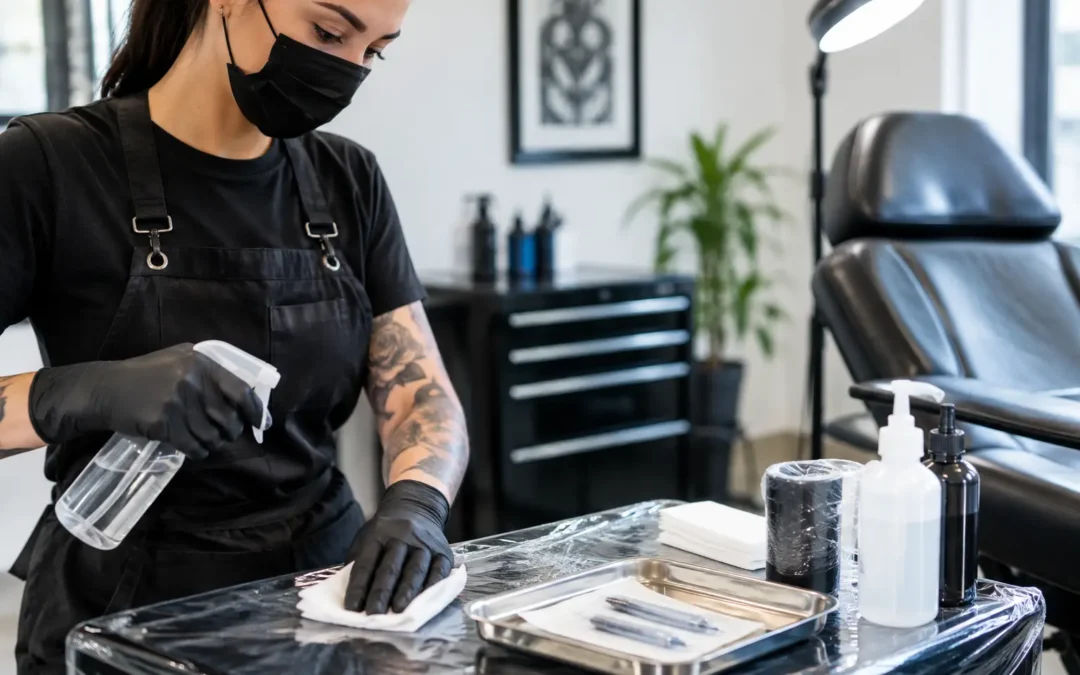
More specifically, look at how the tattoo station is prepared. A professional artist creates a fresh, protected workspace for every client. That means the chair or bed is covered with a clean barrier, the tray is organized, and equipment that may be touched during the session is protected or handled in a way that prevents cross-contamination.
You should not feel awkward taking a moment to observe. A serious artist understands that clients are trusting them with their skin. At Socrates Ink Gallery, cleanliness and comfort belong in the same conversation as design, placement, and technique. Great tattooing is detailed work. A disciplined setup supports that standard.
Single-Use Supplies Should Be Treated That Way
Needles and needle cartridges used for tattooing are single-use items. They should be opened for your session and disposed of properly afterward. Ink should be poured into individual disposable caps, not pulled directly from a shared bottle during the tattoo. Disposable items used during setup and application should not move from one client to the next.
Some studio tools are designed for reuse, but that does not mean they are casually reused. Reusable equipment must be cleaned and sterilized according to proper procedures before it is used again. The distinction matters: single-use supplies are discarded, while reusable instruments require professional decontamination.
If you are unsure what you are seeing, ask. A reputable artist will answer directly and without defensiveness. You do not need to know every name for every tool. You only need to see that your artist has a clear process and treats sanitation as nonnegotiable.
What a Hygienic Tattoo Setup Looks Like
The tattoo process involves skin preparation, pigment, and repeated contact with equipment. Because of that, cleanliness is a sequence of choices, not one quick wipe-down. Watch for your artist to wash their hands before putting on fresh gloves. Gloves should be changed whenever they become contaminated, such as after touching a phone, door handle, face, personal item, or an unprotected surface.
Your skin should be cleaned before the stencil goes on and prepared again before tattooing begins. If shaving is needed, it should be done with a fresh disposable razor. The artist should also use clean products and applicators throughout the appointment rather than returning used materials to containers.
Barrier protection is another visible sign of care. Parts of the tattoo machine, cord, bottles, chair, and work area may be covered to prevent contamination during the session. The exact setup can vary by equipment and tattoo style, but the principle stays the same: anything that could be touched with gloved hands during the tattoo should be managed so germs are not carried from surface to surface.
A clean station is not necessarily a silent one. You may hear wrappers opening, see surfaces being covered, or watch your artist pause to change gloves. Those small interruptions are not a lack of efficiency. They are part of doing the work correctly.
Cleanliness Is Not the Same as Looking Sterile
A studio can have minimalist decor and still have poor habits. It can also be full of personality, art, and color while maintaining excellent sanitation. Do not judge hygiene only by a white-walled aesthetic.
Instead, pay attention to behavior. Are surfaces wiped down between clients? Are fresh barriers placed before your session? Is the artist organized? Do they avoid touching unrelated items with contaminated gloves? The process tells you more than the décor ever will.
The Consultation Is Part of Client Safety
Hygiene includes how a studio guides you before your appointment. A professional consultation should make space for medical and practical questions that may affect your tattoo session. Your artist may ask about the placement, size, skin condition, and timing of your appointment. They may recommend postponing if the area is sunburned, irritated, injured, or otherwise not ready to tattoo.
That can be disappointing when you are excited about your design, but it is good judgment. Tattooing compromised skin can affect both healing and the final result. The same goes for showing up dehydrated, exhausted, or after drinking alcohol. Your artist is not there to judge you. They are there to protect the quality of the work and your experience.
Be honest during your consultation, especially if you have allergies, a skin condition, a history of difficult healing, or health concerns that could matter. Your artist may ask you to speak with a medical professional before moving forward. That is not a refusal to help bring your idea to life. It is a sign that the studio takes permanent work seriously.
Aftercare Begins at the Studio
A hygienic tattoo session does not end the second the machine stops. Once the tattoo is complete, the artist should clean the area, apply an appropriate protective covering, and explain how to care for it at home. The specific aftercare method may differ based on the tattoo, your skin, the location on your body, and the type of bandage used.
What should remain consistent is clear direction. You should leave knowing when to remove the covering, how to wash the tattoo, what kind of moisturizer or aftercare product to use if recommended, and what healing changes are normal. Mild redness, tenderness, and peeling can be part of healing. Increasing pain, spreading redness, unusual swelling, fever, or discharge are reasons to seek medical advice promptly.
Your role matters once you leave the studio. Keep the tattoo clean, avoid soaking it in pools or baths during early healing, do not pick at flakes or scabs, and protect it from direct sun. Aftercare is where a carefully applied tattoo becomes a well-healed piece of art.
Questions Worth Asking Before You Book
You do not need to conduct an interrogation, but a few straightforward questions can help you choose confidently. Ask how the studio prepares each station, whether needles and ink caps are single-use, how reusable equipment is sterilized, and what aftercare support you will receive. You can also ask whether the studio follows Florida licensing and health requirements.
The response matters as much as the answer. A professional studio will be clear, calm, and willing to explain its standards. If someone brushes off reasonable questions, rushes you, or makes you feel like hygiene is an inconvenience, take that seriously. There are too many skilled artists who respect both their craft and their clients to settle for less.
The right tattoo studio gives you room to be excited about your idea without asking you to ignore your instincts. When the design process feels collaborative, the station is prepared with care, and your artist communicates clearly, you can focus on the part that should stay with you: the meaning of the art you chose to wear.