
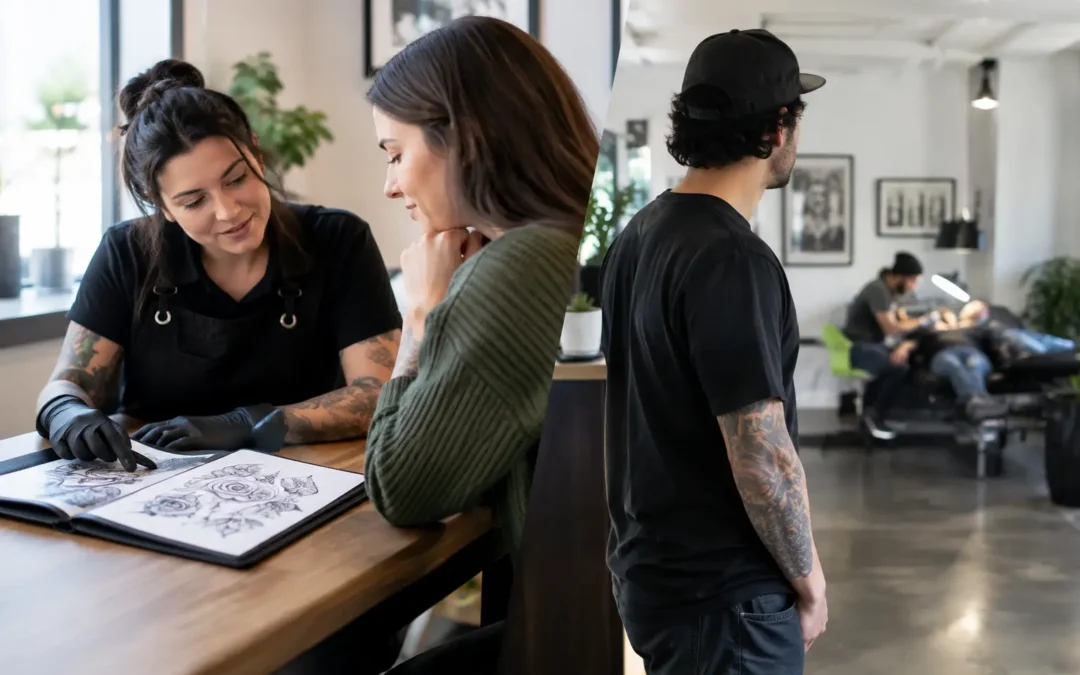
A tattoo idea can arrive all at once: a phrase you cannot stop thinking about, a small memorial, a design you saw and loved. That excitement is real, but the tattoo consultation versus walk in choice can shape the finished piece just as much as the idea itself. One route gives an artist time to build something around your story and anatomy. The other can be a great way to leave with a clean, well-executed tattoo the same day.
Neither option is automatically better. The right choice depends on the scale of the work, how specific your vision is, how flexible you are, and whether you are ready to make a permanent decision today. A strong studio helps you understand that difference without pressuring you into a tattoo that does not serve the idea.
What a Tattoo Consultation Is Really For
A consultation is the planning stage for custom tattoo work. You meet with the artist to discuss the subject, style, placement, size, color palette, reference images, and the feeling you want the tattoo to carry. For a meaningful project, that conversation is not a formality. It is where a loose concept begins to become original skin art.
You do not need to arrive with a finished drawing. In fact, many of the best consultations begin with a clear direction rather than a rigid sketch. You might know you want a black and grey portrait of a family member, a Japanese-inspired sleeve, or a floral cover-up that feels softer than the tattoo underneath. The artist’s role is to translate that starting point into a design that works visually, technically, and physically.
Placement changes everything. A detailed portrait needs enough room for readable features. Fine-line work may need thoughtful spacing so it can remain clean as the skin changes over time. A sleeve has to flow with the arm rather than look like separate stickers placed side by side. A consultation creates space to talk through those realities before ink meets skin.
When planning protects the quality of the tattoo
Consultations are especially valuable when the artwork is large, highly detailed, or emotionally significant. Full sleeves, back pieces, color projects, portraits, cover-ups, and tattoos that must fit around existing work usually need more than a quick conversation at the counter.
Cover-ups are a clear example. The old tattoo’s darkness, shape, location, and scarring can influence what is possible. A skilled artist may recommend a larger design, deeper contrast, or a different subject than you first imagined. That is not a sales pitch for more tattooing. It is honest planning for a cover-up that actually covers.
Custom work also benefits from time between the conversation and the appointment. You can consider the artist’s direction, review the practical details, and arrive ready for the session. The artist can develop a design with intention instead of forcing a complex concept into a rushed window.
When a Walk-In Tattoo Makes Sense
A walk-in tattoo is not a lesser tattoo. It is simply a different kind of appointment. If you have a straightforward idea, are open to available designs, and have flexibility on artist availability, a walk-in can be an excellent experience.
Small symbols, initials, short lettering, simple linework, date tattoos, and select flash-style designs often work well as walk-ins. The key is keeping the scope realistic. A good artist can adapt a simple idea to your placement and make small improvements that elevate it. What a walk-in cannot reliably provide is unlimited design development for a complex custom project on the spot.
Walk-ins can also be right for people who have already done their thinking. If you know the size, placement, and style you want, and the design does not require extensive drawing, a same-day tattoo may be exactly what you need. You still deserve a clean environment, clear communication, proper setup, and an artist who treats even a small tattoo with care.
Availability matters. Walk-in service depends on the studio’s schedule and the work already booked that day. You may need to wait, return later, or choose from the artists and time openings available. If getting tattooed on a particular day matters more than working with a specific artist on an intricate concept, that trade-off may feel worthwhile.
Tattoo Consultation Versus Walk In: The Main Trade-Offs
The biggest difference is not simply time. It is the amount of collaboration and preparation behind the tattoo. A consultation gives you more room to refine a custom concept, while a walk-in favors simplicity, flexibility, and immediate availability.
A consultation is usually the stronger choice when the tattoo needs to tell a detailed story. Maybe you are building a full sleeve from personal symbols. Maybe you want a realistic portrait that captures someone accurately. Maybe you need to blend a new piece into a collection you already have. These projects deserve an artist who can study the references, map the placement, and make purposeful design choices.
A walk-in works best when the idea is clear and compact. Think of a small, well-placed design with a manageable level of detail. It may be spontaneous, but it should never be careless. Before you commit, take a moment to check spelling, review the stencil, and make sure the scale looks right from a normal viewing distance, not only in a close-up photo.
Budget is another practical consideration. Large custom tattoos often require multiple sessions and a larger financial commitment because they require more design time and tattoo time. A walk-in may be more accessible for a smaller piece, but price should not be the deciding factor on placement, size, or quality. The least expensive version of a tattoo you truly care about can become the most expensive one to fix or cover later.
Questions to Ask Before You Choose
Start with the permanence of the decision. If you would be disappointed by a simplified version of the idea, book a consultation. If you are comfortable with a clean, direct design and want it done while the inspiration is fresh, ask about walk-in availability.
Consider the answers to a few honest questions. Does this tattoo need custom artwork? Will it cover an old tattoo or connect to existing pieces? Is the placement difficult, highly visible, or curved? Do you want realism, layered color, fine detail, or a design larger than your hand? If the answer is yes to any of these, planning ahead is usually the better move.
It also helps to think about your own decision-making style. Some clients feel more confident after they have talked through every detail. Others have been certain about a small design for years and simply need an opening in the schedule. Both are valid. The goal is not to make tattooing feel overly complicated. The goal is to match the process to the artwork.
How to Prepare for Either Appointment
Bring useful references, but do not expect an exact copy of another person’s tattoo. Reference images help show what you respond to: contrast, line weight, color, composition, mood, and placement. Your artist can use that information to create something that belongs to you.
For a consultation, be ready to explain the story behind the design and what parts are non-negotiable. Also be open when the artist recommends changes to the size or layout. Their experience can prevent common problems, such as lettering that is too small to age well or a detailed image squeezed into a narrow space.
For a walk-in, keep your request focused. Know the body area you want tattooed, have a reasonable size in mind, and arrive prepared for the session. Eat beforehand, hydrate, bring a valid ID, and wear clothing that gives the artist easy access to the placement. If the artist says your idea needs more time or a future consultation, treat that as professional judgment, not a rejection.
Trust the Process, Not the Rush
The best tattoo experience feels considered, whether it begins with a scheduled consultation or a walk-in conversation. At Socrates Ink Gallery, the standard is the same: listen closely, protect the quality of the work, maintain a clean and comfortable setting, and create art you will be proud to wear.
If your idea needs room to grow, give it that room. If it is simple, clear, and ready for today, a walk-in may be the right moment. The lasting choice is not between planning and spontaneity. It is choosing a process that gives your tattoo the attention it deserves.