
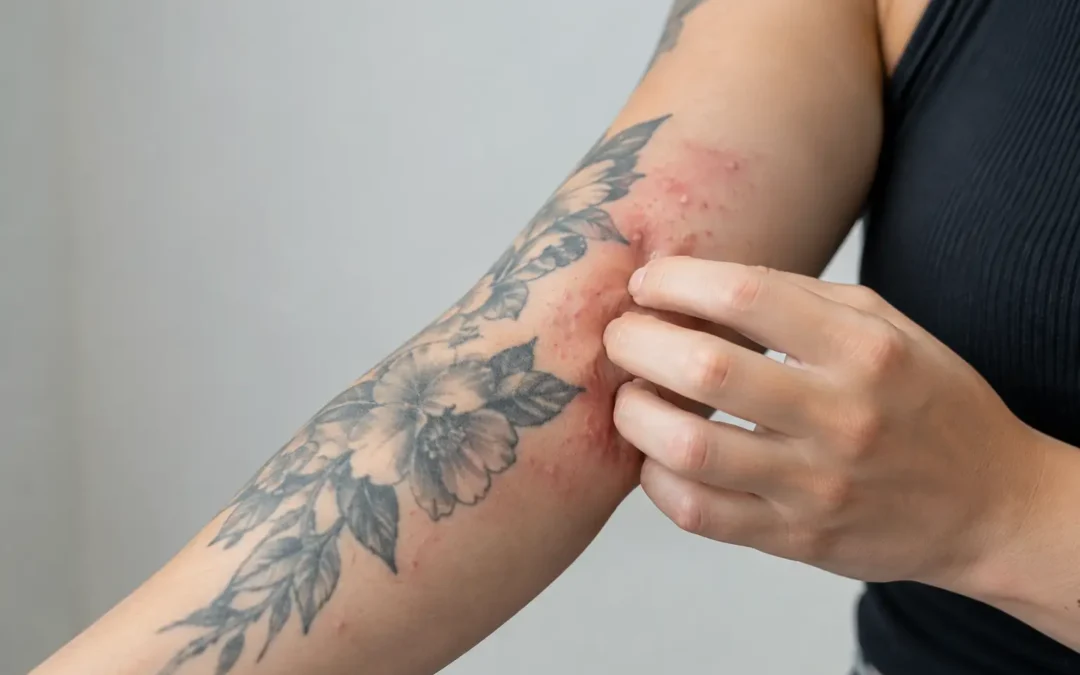
A new tattoo should feel tender, warm, and a little irritated at first. That is part of the healing process. Tattoo ink allergies are different: the skin may become intensely itchy, raised, scaly, swollen, or persistently inflamed in ways that do not settle as expected.
For anyone planning meaningful, permanent artwork, knowing the difference matters. A tattoo is not just a design choice. It is a procedure that places pigment in the skin, and your body can react to the ink, the healing products, adhesive coverings, or another part of the process. Most clients heal without an allergic reaction, but clear information helps you make careful decisions before and after your appointment.
What Tattoo Ink Allergies Can Look Like
An allergic reaction does not always show up immediately. Some reactions start within hours or days, while others appear weeks, months, or even years after a tattoo has healed. The reaction may affect one area of the tattoo, one color, or the entire piece.
Common signs include persistent itching, a bumpy or raised texture, redness that returns after the initial healing stage, dry or flaky skin, small blisters, swelling, or a rash that stays within the tattooed area. In some cases, the skin over a particular color can become thickened, shiny, or uneven.
A tattoo can also be irritated without being an allergy. Normal healing often includes mild redness, light swelling, clear fluid or plasma during the first day, peeling, and temporary itching. Those symptoms should gradually improve. An allergy is more likely when symptoms are severe, keep coming back, worsen after healing, or are clearly limited to a specific pigment.
Which Tattoo Colors Cause the Most Reactions?
Any tattoo color can cause a reaction, but red pigment has historically been the color most often connected with allergic reactions. Modern ink formulas vary widely, and manufacturers have moved away from many older ingredients, yet red can still be unpredictable for some people. Yellow, orange, green, and blue may also cause reactions.
This does not mean color tattoos are unsafe or that everyone should avoid red ink. It means color selection deserves a real conversation during the design process, especially if you have a history of eczema, contact dermatitis, metal sensitivity, or previous reactions to cosmetics and dyes.
Black and grey tattoos can also cause irritation or allergy, despite the common assumption that black ink is risk-free. The source might be the pigment itself, a preservative, a carrier ingredient, or a product used during aftercare. There is no universal “hypoallergenic” tattoo ink that guarantees a reaction will not happen.
Allergy, Infection, or Normal Healing?
These conditions can overlap, which is why self-diagnosis can be risky. Infection is often associated with pain that becomes worse rather than better, spreading redness, increasing heat, pus-like drainage, fever, or red streaks moving away from the tattoo. It needs prompt medical attention.
An allergic reaction often presents more as itchiness, rash, bumps, or swelling concentrated in the inked area. But an irritated tattoo can become damaged from scratching, over-moisturizing, picking, or using harsh products, creating a separate risk of infection.
If you are unsure what you are seeing, contact a qualified healthcare professional rather than guessing. Photos taken in good lighting can also help you track whether redness or swelling is improving or spreading from one day to the next.
When to seek urgent care
Get urgent medical help if you develop trouble breathing, swelling of the lips, tongue, face, or throat, widespread hives, faintness, or rapid swelling beyond the tattoo area. These may signal a serious allergic response.
You should also seek prompt medical advice for fever, severe pain, rapidly spreading redness, pus, or a tattoo that is becoming increasingly hot and swollen. Do not wait for a scheduled touch-up or try to treat a possible infection with leftover medication.
Why a Professional Consultation Matters
A serious custom tattoo begins before the stencil goes on. The consultation is the right time to discuss prior skin reactions, allergies to adhesives or latex, medications, immune conditions, and any concerns about particular colors. This is not about talking someone out of their idea. It is about planning artwork with the information that can protect both the design and the client.
Be direct with your artist. If a past tattoo became itchy every time you were in the sun, if red cosmetic pigments have caused a rash, or if medical adhesive has irritated your skin, say so. An experienced artist can review options, document the concern, and help guide the project toward an informed choice.
At Socrates Ink Gallery, the consultation process is built around translating a personal idea into custom work, not rushing someone into a chair. That same care should apply to safety questions. A clean, professional studio, single-use supplies, quality materials, and thoughtful aftercare all reduce avoidable problems, even though they cannot eliminate every individual skin sensitivity.
Can You Patch Test Tattoo Ink?
A patch test may sound like a simple answer, but it has limits. Applying a small amount of ink to unbroken skin does not reliably predict how your immune system will respond when pigment is implanted into the dermis. A tiny test tattoo may provide more information, but it still cannot promise that a later reaction will not occur.
For a client with a known history of serious reactions, a dermatologist or allergist is the best person to ask about testing and risk. They may evaluate sensitivities to certain substances, but identifying the exact tattoo-ink trigger can be difficult because formulas differ and reactions may involve more than one ingredient.
Do not perform a home test by poking, scratching, or trying to implant ink into your own skin. That creates a preventable infection risk and does not provide a medically reliable answer.
What to Do if You Think You Are Reacting
Start by protecting the tattoo. Avoid scratching, exfoliating, soaking it, applying fragranced lotions, or experimenting with multiple creams at once. Keep the area clean, follow the aftercare directions you were given, and take clear photos of the changes.
Then contact a healthcare professional, particularly if symptoms are persistent, painful, widespread, or getting worse. Treatment depends on the cause. A clinician may recommend a specific topical treatment, oral medication, or further evaluation. Do not use strong steroid creams, antibiotics, or antihistamines as a substitute for medical advice when the reaction is severe or unclear.
It is also wise to tell your tattoo artist what happened. A professional artist should want to know which colors and products were used so the information can support future planning. That conversation is not about blame. Bodies react differently, and honest communication gives you a better path forward.
Do Not Rush Into Tattoo Removal
When a tattoo is reacting, removal may seem like the obvious fix. It is not always the immediate answer. Laser tattoo removal breaks pigment into smaller particles so the body can clear them, and that process can sometimes intensify an existing allergic response. Attempting removal during an active reaction without medical guidance can complicate the situation.
A dermatologist can help determine whether the tattoo needs treatment first and whether removal is appropriate. The best next step depends on the severity of symptoms, the ink involved, the location of the tattoo, and your medical history.
Choosing Art With Your Skin in Mind
A great tattoo should feel personal long after the appointment, and that starts with patience. Share your health history, ask questions about aftercare, choose a studio that treats cleanliness as nonnegotiable, and give your skin the attention it deserves during healing.
If something feels wrong, trust that instinct. Getting timely medical guidance can protect your health and preserve the best possible outcome for the artwork you chose to wear.