
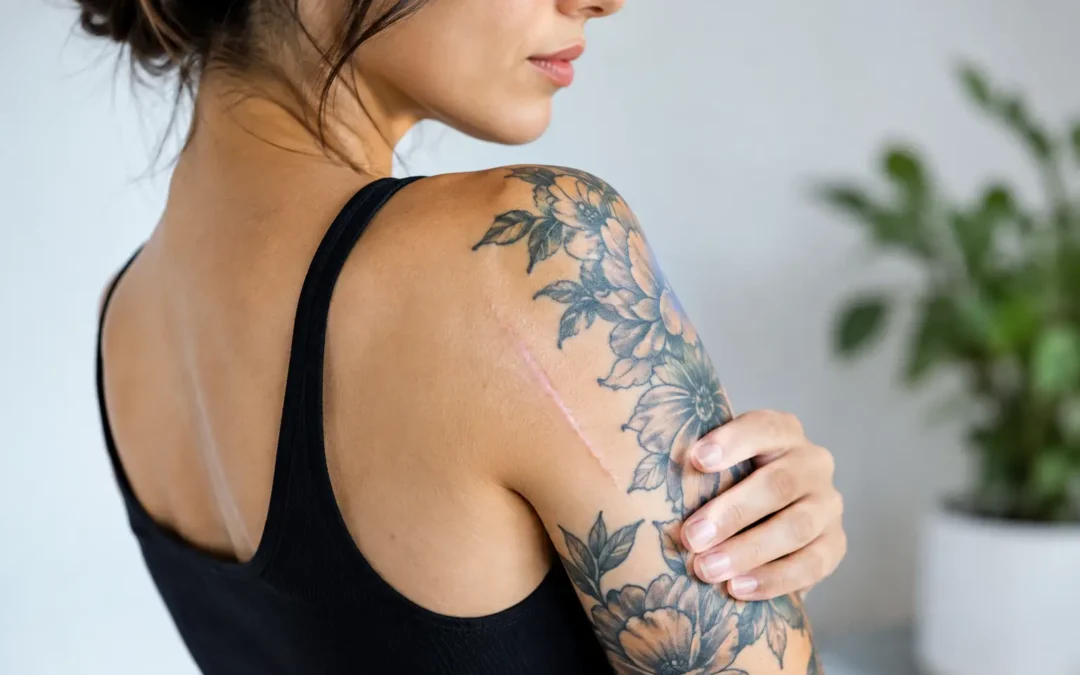
A surgical scar can carry a lot more than a change in texture. It may mark a recovery, a diagnosis, childbirth, an accident, or a chapter you would rather define on your own terms. Can tattoos cover surgical scars? Often, yes – but the right answer depends on the scar’s age, condition, placement, and how your skin heals.
A scar-cover tattoo should never be treated like a quick fix. The goal is not to simply put ink over a line. The goal is to create intentional artwork that works with your skin, respects your history, and feels like something you chose.
Can Tattoos Cover Surgical Scars?
Many mature surgical scars can be incorporated into or visually softened by a custom tattoo. An experienced artist can use line flow, shading, color, negative space, and placement to draw the eye toward the artwork as a whole rather than the scar underneath it.
That said, tattooing scar tissue is different from tattooing untouched skin. Scarred skin can be thicker, thinner, less elastic, more sensitive, or less predictable when it takes ink. A successful result begins with an honest consultation, not a promise that every scar will disappear completely.
In some designs, the scar becomes part of the composition. A curved abdominal scar may guide the movement of florals, ornamental work, or a Japanese-inspired design. A linear scar can be broken up with black and grey shading, botanical elements, script, geometric forms, or a larger scene. When the concept is built around the body instead of forced onto it, the result usually looks more natural.
Wait Until the Scar Is Fully Healed
The most common mistake is moving too soon. A surgical incision may look closed on the surface while deeper tissue is still healing. Tattooing an immature scar can lead to excess irritation, inconsistent ink retention, or an outcome that changes as the scar continues to settle.
For many people, a scar needs at least 12 to 18 months before it is considered ready for tattooing. Some scars need longer, especially after major surgery, reconstructive procedures, skin grafts, or complications during healing. Your surgeon or dermatologist can give the most reliable guidance for your specific recovery.
A scar is more likely to be ready when it is fully closed, no longer red or actively inflamed, and has stopped changing in height or texture. It should not be painful, itchy, weeping, or tender. If you are still using wound care products, managing an infection, or noticing ongoing changes, wait.
Medication matters too. Certain prescriptions can affect healing, immune response, bruising, or bleeding. If you are taking medication after surgery or managing an ongoing health condition, speak with your medical provider before scheduling a tattoo. A professional tattoo artist can assess the artistic and practical side of the project, but medical clearance belongs with your healthcare team.
Some Scars Need Extra Caution
Not every scar responds the same way. Hypertrophic scars are raised but remain within the original incision area. Keloids extend beyond the original wound and can continue growing. If you have a personal or family history of keloid scarring, tattooing may trigger another keloid, even in skin that was not previously scarred.
Scars from burns, skin grafts, mastectomies, joint replacements, and abdominal surgeries can also behave differently because of changes in sensation, circulation, and skin thickness. Numbness does not always mean a tattoo will be painless, and reduced sensation can make it harder to judge how your body is responding during the session.
An artist should be comfortable saying when a project is not yet a good candidate for tattooing. That is not a rejection of your idea. It is a commitment to protecting both your health and the quality of the finished work.
What a Scar Cover-Up Tattoo Can and Cannot Do
A well-designed tattoo can change how noticeable a scar appears. It can bring contrast, movement, and visual balance to an area that once felt difficult to look at. It can also give the wearer a new relationship with a part of their body that has been through something significant.
But a tattoo cannot erase the physical texture of scar tissue. If a scar is deeply indented, raised, shiny, or uneven, those characteristics may still be visible at certain angles or in certain lighting. Ink can redirect attention, but it cannot make scar tissue behave exactly like untouched skin.
There are trade-offs in color and detail as well. Fine-line work can be beautiful around a scar, but it may not provide enough visual weight to camouflage a prominent area. Pale colors and skin-tone ink are usually not reliable solutions for surgical scars because they can heal unpredictably and shift over time. Larger compositions, solid black, smooth greywash, or carefully planned color often provide more control.
The right style depends on your scar and your taste. A client who wants a delicate botanical design may need a different approach than someone considering a bold full-color piece. Your artist should explain why a certain placement, scale, or level of contrast will serve the artwork better.
The Consultation Is Where the Design Starts
A scar-cover project deserves a real conversation before a needle touches skin. During a consultation, be ready to share when the surgery occurred, how the area healed, whether you have had prior reactions to tattoos, and what you want the finished piece to feel like.
Clear, well-lit reference photos can help start the discussion if an in-person consultation is not immediately possible. In person, the artist can evaluate the scar’s texture, direction, flexibility, and relationship to the surrounding anatomy. This matters because a design that looks great on a flat sketch may need to change once it follows a shoulder, ribcage, abdomen, knee, or chest.
Bring inspiration, but leave room for custom design. The strongest scar cover-ups are not copied images placed over an incision. They are original pieces developed around your body, your preferences, and the technical realities of the area.
At Socrates Ink Gallery, the design process is built around that collaboration. A custom concept can be adjusted for coverage, flow, contrast, and long-term readability before your tattoo appointment begins.
Choosing an Artist for Scar Work
Look beyond a general tattoo portfolio. Ask to see healed work, especially healed scar-cover tattoos when available. Fresh tattoos can look dramatic because the skin is red and the ink is saturated. Healed photos provide a more useful picture of how an artist handles contrast, texture, and placement over time.
You should also feel comfortable asking direct questions. How long should you wait after surgery? Does the artist think your scar is suitable? Would the design work better around the scar instead of directly over it? Is one long session realistic, or would shorter appointments be better for this area?
A professional will not rush you into booking. They will be clear about sanitation, aftercare, session planning, and the possibility that scar tissue may need a touch-up after healing. This is careful work, and careful work takes time.
Prepare for a Different Tattoo Experience
Tattooing over surgical scars can feel more intense, less intense, or simply different than tattooing normal skin. Sensation may vary within the same scar. Some clients experience sharp sensitivity around the edges, while others notice numbness in the center. No artist can predict that perfectly in advance.
The area may also swell more easily or heal more slowly. Follow your artist’s aftercare instructions closely, avoid friction from tight clothing, and do not pick at peeling skin or scabs. Keep the tattoo clean, protect it from sun exposure, and give it the same patience you gave your surgical recovery.
A touch-up is not necessarily a sign that something went wrong. Scar tissue can retain pigment unevenly, and a second session may be the best way to refine saturation or detail once the tattoo has fully healed.
Your scar does not have to dictate the final image you see in the mirror. Give your body enough time to heal, choose an artist who respects the process, and let the artwork be designed with intention. When the timing and design are right, a tattoo can become a meaningful new layer of your story.