
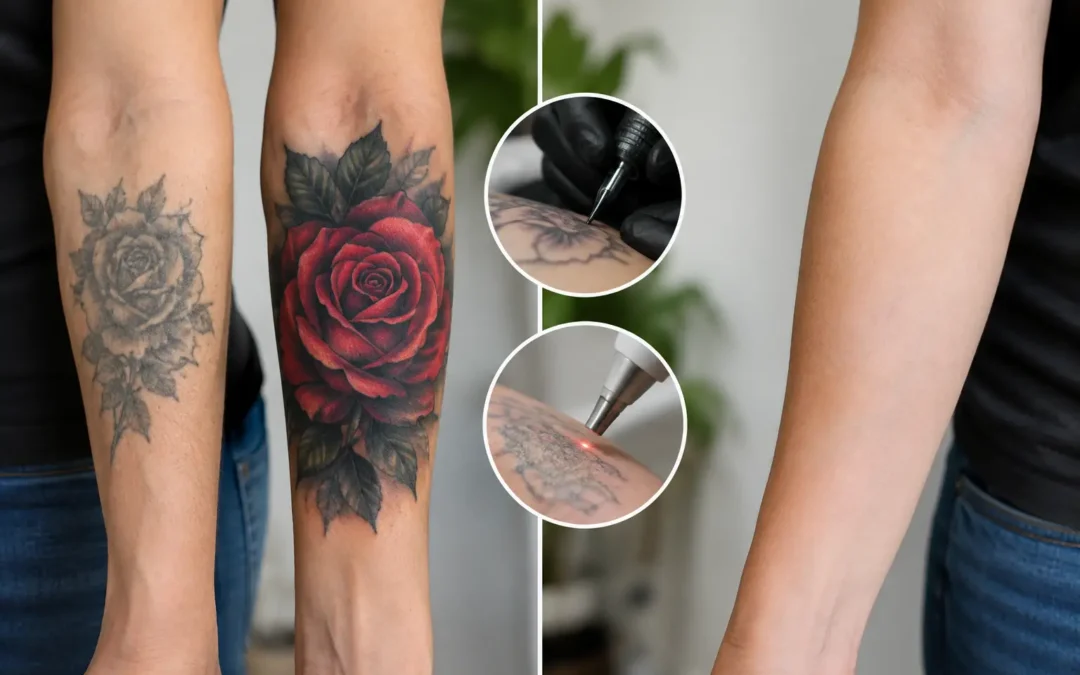
An old tattoo can carry more weight than the ink itself. Maybe the design no longer reflects you, the lettering is hard to read, or a past artist left you with uneven lines and faded color. When deciding on cover up versus removal, the right answer is not always the fastest one. It depends on what is currently on your skin, what you want to wear next, and how much time you are willing to invest in the process.
A strong result starts with an honest look at the existing tattoo. A skilled artist is not there to judge the original piece. The goal is to understand its shape, saturation, placement, and history, then create a plan that gives you artwork you can feel proud to show.
Cover Up Versus Removal: The Core Difference
A tattoo cover-up transforms existing ink into a new design. It is still tattooing, but the design process is more strategic than starting with a blank area of skin. The new piece must use contrast, texture, movement, and thoughtful placement to redirect the eye away from the original tattoo.
Tattoo removal uses laser treatments to break down pigment over a series of appointments. The body gradually clears away those pigment particles between sessions. Removal can significantly fade a tattoo and, in some cases, remove much of it, but results vary based on ink color, skin tone, age of the tattoo, depth of pigment, and how your body heals.
Neither choice is automatically better. A cover-up may be the more direct path when you are ready for new artwork and open to a design that works with the existing ink. Removal may make more sense when you want the tattoo gone without replacing it, or when the current piece is so dark, dense, or restrictive that it limits the quality of a future cover-up.
When a Cover-Up Is the Right Move
A cover-up is ideal for clients who still love tattoos but have outgrown one specific piece. It can turn a name, symbol, faded color tattoo, or poorly executed design into something original and intentional.
The biggest advantage is creative transformation. Rather than spending months or years watching a tattoo fade, you work toward a finished piece that has a new story. Black and grey designs, florals, animals, ornamental elements, Japanese-inspired imagery, and larger compositions can all provide the texture and visual flow needed to conceal older work.
That does not mean every unwanted tattoo can disappear under a tiny new image. Cover-ups often need to be larger than the original tattoo. Dark sections may need to be incorporated into shadows, backgrounds, petals, scales, hair, smoke, or other details. The artist is designing around the old ink, not simply painting over it.
A quality cover-up also requires flexibility. If your original tattoo is a small, dark block of lettering, a delicate fine-line design directly on top is unlikely to hold up as a convincing solution. The strongest design may be bolder, larger, or placed to flow beyond the original boundaries. That is not a compromise in the negative sense. It is how the artwork gains enough room to look natural instead of forced.
What makes a tattoo coverable?
Age alone does not decide whether a tattoo can be covered. Some older tattoos fade beautifully, while others remain highly saturated for decades. During a consultation, an artist will look at the darkness of the ink, the colors used, scar tissue, line density, placement, and the design you have in mind.
In general, faded black ink and older color tattoos offer more room to work with than fresh, heavily saturated blackwork. But even a difficult tattoo may be coverable with the right concept. The question is whether the available design options match your style and expectations.
When Laser Removal Deserves a Closer Look
Removal is often the better path if you do not want another tattoo in that area. It is also worth considering when the existing tattoo is extremely dark, very large, or located where you want a much lighter and more delicate future design.
Laser sessions can also be used as preparation for a cover-up. This is commonly called tattoo lightening. You may not need to remove every trace of the old tattoo. A few treatments can reduce enough darkness to give your tattoo artist more freedom with color, contrast, and scale.
That extra freedom matters. Lightening a dense black tattoo may allow for a more refined portrait, brighter color work, softer shading, or a design closer to the image you originally wanted. For some clients, a short removal phase is the difference between settling for a cover-up and getting a piece that truly feels like their own.
Removal requires patience. Treatments are spaced apart to allow your skin to heal and your body to process the pigment. The total timeline can be substantial, and the final outcome is not guaranteed to be perfectly blank skin. Some colors respond differently than others, and certain tattoos may leave faint pigment or textural changes behind.
Compare the Real Trade-Offs Before You Decide
The decision is personal, but it helps to weigh the practical realities rather than focusing only on the unwanted tattoo in the mirror.
A cover-up usually creates a faster route to a finished artistic result. You will still need to plan for tattoo sessions, healing, and possibly multiple appointments for a larger piece, but you are moving directly toward new artwork. The trade-off is that you need to accept a design with enough visual strength to conceal what is already there.
Removal provides more control over whether you keep tattooed skin at all. It can also expand your choices for a future tattoo. The trade-off is time, repeated treatments, expense over multiple sessions, and uncertainty around how completely the pigment will fade.
Pain is also hard to compare because each person experiences it differently. Both tattooing and laser treatment can be uncomfortable. Placement, session length, your pain tolerance, and the condition of your skin all matter. Do not make the choice based on a promise that one route is painless. Choose based on your end goal.
Cost should be viewed as a full project, not a single appointment. A cover-up may involve a custom design and several tattoo sessions. Removal may involve many laser appointments before any new tattoo work begins. A consultation lets you understand the scope before you commit.
Start With the Design You Actually Want
The most useful question is not, “How do I hide this?” It is, “What would I be excited to wear instead?” That answer guides every smart decision that follows.
Bring reference images that show the style, mood, placement, and subject matter you like. Share what you dislike about the old tattoo, but leave room for professional design direction. An experienced tattoo artist can explain why a concept will work, where it needs to grow, and whether laser lightening would improve the final result.
At Socrates Ink Gallery, the consultation is where the old tattoo stops being a problem and becomes part of the design conversation. The focus is on original artwork, clear expectations, and a plan that respects your skin as much as your vision.
Give healed skin the time it needs
Do not rush into either option if the tattoo is new, irritated, sunburned, or still healing. Fresh tattoos need time to settle before they can be accurately evaluated for a cover-up or laser treatment. The same principle applies between laser sessions and before tattooing over lightened skin.
Protect the area from sun exposure, follow aftercare instructions carefully, and be transparent about any scarring or prior treatments. Healthy, fully healed skin gives your artist the best foundation for clean application and long-lasting results.
The best next step is a conversation with an artist who will be honest about what your skin can support. Whether you choose a bold cover-up, a few laser sessions first, or full removal, take the route that leaves you confident when you look at the finished result.