
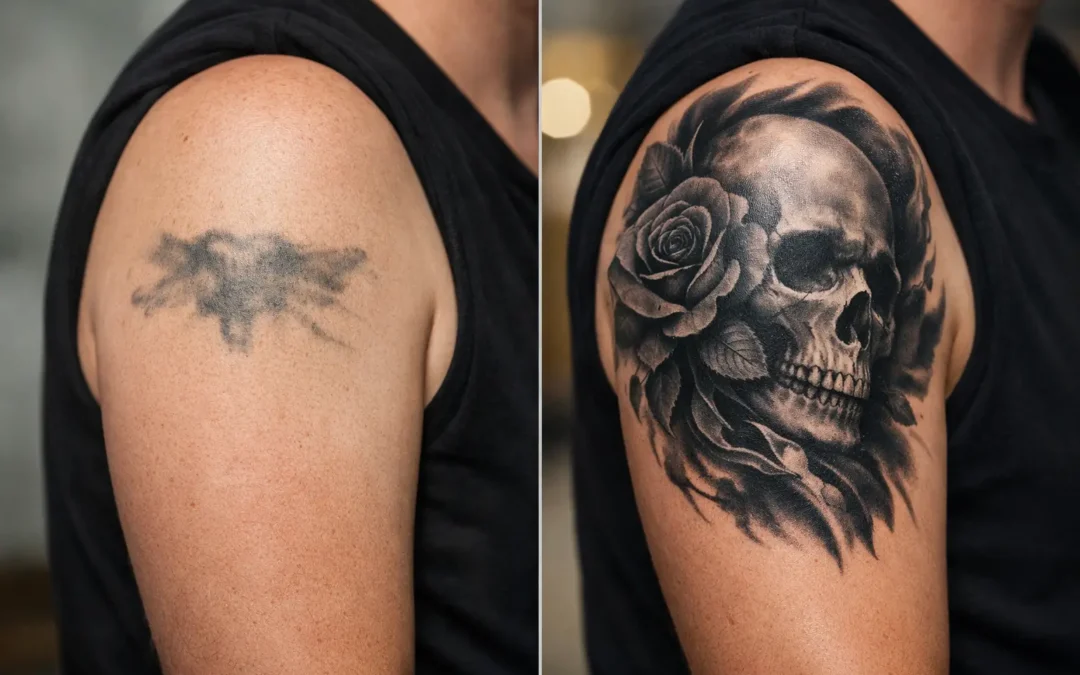
A strong coverup tattoo before after transformation is not about hiding a mistake under the first dark design that comes to mind. It is about turning existing ink into a new piece of art that looks intentional, balanced, and personal. The best results make people see the new tattoo first, not the tattoo that came before it.
That takes more than a reference photo and a quick appointment. Cover-up work asks an artist to read the skin, understand the old ink, build a design with enough movement and contrast, and set honest expectations before the needle ever touches the skin. If you are considering a cover-up in Tampa, the right process can make the difference between a temporary disguise and artwork you are proud to wear.
What a Coverup Tattoo Before After Really Shows
Before-and-after photos can be dramatic, but they do not always show the planning behind the finished result. A successful cover-up usually changes more than the image. It changes the scale, placement, flow, and visual weight of the area.
The “before” may be faded lettering, an outdated symbol, uneven linework, a small tattoo that no longer fits your life, or a piece with a name you are ready to leave behind. The “after” often needs to be larger or more detailed because the new design must redirect the eye away from the old shapes and pigment.
That does not mean every cover-up has to become a large black tattoo. Black and grey realism, florals, Japanese-inspired imagery, animals, ornamental work, bold color, and custom compositions can all work beautifully. The right direction depends on what is already in the skin and what you want the new artwork to say.
A quality before-and-after result should look natural at normal viewing distance. Up close, an experienced tattoo collector may still recognize where the original ink influenced the design. That is not failure. Cover-up tattooing is an art of intelligent design, not digital photo editing on skin.
The Old Tattoo Sets the Rules
Every cover-up begins with an honest evaluation. Dark, saturated black ink is harder to cover than a faded grey tattoo. Dense color can limit which colors will read clearly on top of it. Raised scarring, blowouts, and uneven healing may also affect the approach.
Size matters too. A new design does not always need to be dramatically bigger, but it generally needs enough room to break up the old tattoo’s outline. Fine-line work alone may not provide enough density to hide a dark existing image. In other cases, a delicate addition can work if the old tattoo is light and strategically placed.
Placement can help or complicate the process. Areas with natural curves, such as the shoulder, thigh, forearm, or calf, give an artist room to create flow. Small, isolated tattoos in highly visible areas may require a more deliberate composition. Skin tone and sun exposure also matter because fresh ink needs time and proper aftercare to settle into a clean, lasting result.
This is why a professional consultation matters. An artist should not promise that every old tattoo can disappear completely without first seeing it in person or reviewing clear, well-lit photos. Trust the process when the recommendation is a larger design, a bolder element, or a different concept than the one you first pictured. Those decisions protect the final piece.
Design Is How the Old Ink Disappears
Great cover-ups use visual strategy. Dark areas of the original tattoo may become shadows, leaves, fur, hair, background texture, deep folds in fabric, or part of a larger black-and-grey composition. Old lines can be interrupted by petals, scales, smoke, waves, geometric structure, or carefully placed contrast.
The goal is not to trace over the original tattoo. Simply tattooing a heavier line on top of an old line can create a darker, muddier version of the same problem. Instead, the artist creates a new focal point and uses surrounding detail to change how the eye travels across the skin.
For example, an old name may become part of the shadow beneath a rose, the depth within a portrait background, or the dark structure of a Japanese-inspired design. A small black symbol might fit inside an animal portrait, floral cluster, or ornamental pattern. The concept should come from your style and story, not from a generic cover-up formula.
At Socrates Ink Gallery, custom tattoo planning is built around that collaboration. Omar Cruz works from the reality of the existing tattoo and the client’s vision to develop artwork that feels like it belongs on the body, rather than a design forced over a problem area.
When Laser Fading Can Improve the Result
Laser removal is not required for every cover-up, but partial fading can open up more options. It is especially useful when the old tattoo is very dark, heavily saturated, or located where you want a lighter, more detailed final design.
A few laser sessions may reduce enough pigment for cleaner color choices, more open skin breaks, and less need for heavy black shading. This can be a smart option for someone who wants fine detail, a softer floral piece, or an image with bright color in an area covered by dense old ink.
There is a trade-off. Laser treatments add time, cost, and healing periods. You should never tattoo over skin that has not fully recovered from treatment. For some clients, the better decision is to skip laser fading and embrace a bold design that uses the old tattoo as part of the new composition. For others, waiting creates a result much closer to their original vision.
An artist-led consultation can help you choose based on the tattoo in front of you, not on a one-size-fits-all answer.
What to Expect From the Appointment Process
Bring clear photos of the tattoo you want covered and any visual references that show the style you are drawn to. References are useful for communicating mood, placement, and detail level, but your final tattoo should be developed as original artwork for your body.
During the consultation, expect questions about the age of the existing tattoo, whether it has been reworked before, how it healed, and what you dislike about it. You should also talk openly about budget, timing, and how much you are willing to expand the piece. Cover-ups sometimes take more than one session, particularly when they involve sleeves, detailed backgrounds, portrait work, or layered color.
Once the direction is clear, the artist creates a design that accounts for the old tattoo rather than ignoring it. Proper stencil placement and adjustment are especially important. A design can look perfect on paper but need refinement once it follows the curve of your arm, shoulder, chest, or leg.
The application itself should happen in a clean, hygienic studio with professional equipment and clear aftercare guidance. Your part is straightforward but essential: arrive prepared, follow healing instructions, avoid picking or over-moisturizing, and protect the tattoo from direct sun while it heals.
Healing Can Change the First Impression
A cover-up will look darker and more intense when it is fresh. That is normal. During healing, the skin may flake, the surface can appear cloudy, and details may look temporarily muted. Do not judge the final result during the first week.
Once healed, the tattoo settles and the design becomes easier to read. Some cover-ups benefit from a touch-up after full healing, especially if the original ink was unusually dark or if a specific area needs more saturation. A touch-up is not automatically a sign that something went wrong. It can be part of refining permanent artwork on living skin.
Give the piece time, follow your artist’s care instructions, and communicate if you have concerns. Good tattoo work is built on both skilled application and responsible healing.
Choose the Artist, Not Just the Idea
Cover-up tattoos require technical control, but they also require judgment. Look at healed work when possible, not only fresh photos. Pay attention to whether the new design has a clear focal point, whether the darkness feels purposeful, and whether the artist’s style matches the artwork you want to wear.
You should feel heard during the consultation, but you should also expect professional guidance. An artist who agrees to every request without discussing limitations may be selling comfort in the moment rather than protecting your long-term result. The right artist will explain what is possible, what needs adjustment, and why.
Your old tattoo does not have to define the next chapter of your skin art. Bring the real tattoo, the real story, and an open mind to the consultation. With a thoughtful design and the right artist, the after can feel less like a cover-up and more like the piece you were meant to get all along.