
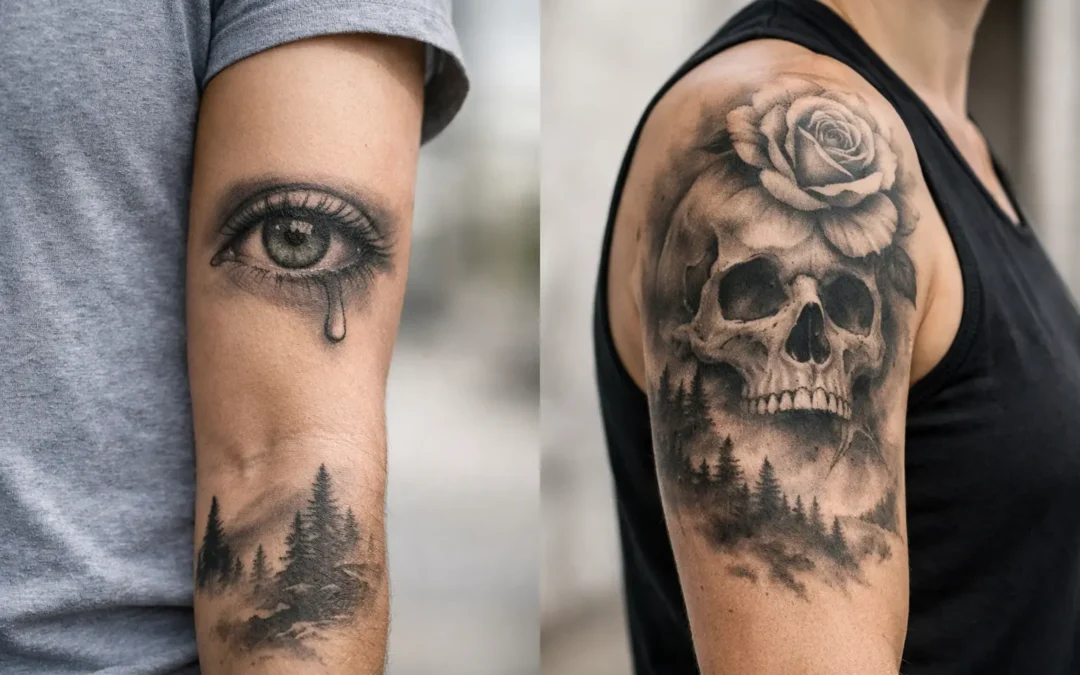
A fresh tattoo can look almost startlingly sharp: deep black areas, crisp highlights, and soft grey tones that seem to sit right on the surface of the skin. But black and grey tattoos healed are the real measure of the work. Once the skin has recovered and the ink has settled, the tattoo should still have depth, readable detail, and a smooth range of values that feels intentional rather than faded.
For a custom piece, healing is not an afterthought. It is part of the process. The artist’s technique, your skin, the placement, and the care you give the tattoo all influence what that artwork looks like months and years from now.
What Changes When a Black and Grey Tattoo Heals?
A new black and grey tattoo usually appears darker, cooler, and more contrasted than it will after healing. That is normal. Fresh ink is viewed through skin that has been recently tattooed, often slightly swollen and coated with plasma or ointment. The surface is temporarily amplifying the intensity.
As the skin repairs itself, the tattoo can look cloudy or dull for a short period. Many clients call this the “milky” stage. It does not mean the tattoo is disappearing. A new layer of skin is forming over the tattoo, which can soften the image until the area fully settles.
Once healed, black remains the foundation of the design, while the greywash transitions become more natural and skin-forward. A strong healed tattoo should not rely on darkness alone. It should use contrast strategically: rich blacks where depth is needed, open skin for highlights, and controlled grey tones to shape the image.
That is why a portrait, religious piece, animal design, or full sleeve can look powerful in black and grey without becoming a flat field of dark ink. The best work reads clearly from a distance and rewards attention up close.
Why Healed Results Depend on More Than Aftercare
Aftercare matters, but it cannot rescue a design that was not planned for the skin. Black and grey work requires the artist to think ahead about how values will settle, how lines will age, and where detail needs room to breathe.
Contrast is what keeps the design alive
A tattoo with every area shaded to the same mid-grey level may look detailed when fresh, then lose separation after it heals. Strong black-and-grey composition uses a full value range. Darker areas create structure. Lighter areas direct the eye. Natural skin breaks prevent the piece from becoming visually crowded.
This is especially important in portraits and realism. Small details such as eyelashes, hair texture, wrinkles, or fabric folds need contrast around them to remain visible. More detail is not always better. Detail placed with purpose is what lasts.
Placement changes the conversation
The same design can heal differently on a forearm, ribcage, hand, thigh, or shoulder. Skin thickness, movement, friction, sun exposure, and the amount of space available all play a role.
A large black and grey tattoo on the upper arm or calf often gives an artist more room for smooth transitions and durable detail. A smaller piece on a finger or side of the hand faces more wear and may need a simpler approach. Areas that bend, rub against clothing, or see constant sunlight can require different design choices.
During a consultation, a good artist will be honest when a requested size or placement will not support the level of realism a client wants. That is not a limitation of creativity. It is respect for the finished piece.
Your skin is part of the artwork
No two people heal exactly alike. Skin tone, texture, sensitivity, lifestyle, hydration, healing history, and immune response can all influence how a tattoo settles. This does not mean certain skin types cannot wear black and grey beautifully. It means the design and technique should be tailored to the person wearing it.
For example, subtle grey shading may show differently depending on the skin’s natural tone. An experienced artist can plan the value range accordingly, making sure the tattoo has enough contrast to remain visible while still feeling refined.
The Healing Timeline: What Is Normal?
The visible healing stage commonly takes a few weeks, though deeper settling continues longer. In the first few days, mild redness, tenderness, and a small amount of clear fluid are common. The tattoo may feel warm and look extra dark.
Around the first week, peeling and flaking often begin. This is where patience matters. Do not pick at flakes or pull at peeling skin. Doing so can create uneven healing and may affect how the tattoo retains ink. Light scabbing can happen, but thick scabs, spreading redness, increasing pain, pus, or fever are reasons to contact a medical professional promptly.
After the peeling stage, the tattoo can look faded or hazy before its clarity returns. Give it time. The skin needs to complete its repair cycle before you judge the final result or decide whether a touch-up is needed.
How to Protect a Black and Grey Tattoo While It Heals
The goal of aftercare is simple: keep the tattoo clean, lightly moisturized, and protected from unnecessary irritation. Follow the specific instructions your artist provides, because bandage type and individual skin needs can vary.
Wash your hands before touching the tattoo. Clean the area gently with mild, fragrance-free soap and lukewarm water, then pat it dry with a clean paper towel. Apply only a thin layer of the recommended aftercare product. Heavy lotion does not make a tattoo heal faster. It can trap moisture and leave the skin feeling overworked.
For the first part of healing, avoid soaking the tattoo in pools, hot tubs, lakes, or the ocean. Skip direct sun, intense workouts that cause excessive rubbing or sweating around the area, and tight clothing that constantly scrapes against the tattoo. A Tampa day outdoors can be hard on fresh skin, so plan ahead if your tattoo is in an exposed area.
Once the tattoo is healed, sunscreen becomes one of the most practical long-term habits you can have. UV exposure can soften contrast over time, particularly in delicate grey shading. Cover the tattoo when possible and use broad-spectrum sunscreen on exposed work.
Will Black and Grey Tattoos Fade?
All tattoos change gradually with age because skin changes. The question is not whether a tattoo will remain identical forever. The question is whether it was built to age with character.
Black ink is generally the most durable visual anchor in tattooing, which is one reason black and grey remains a classic choice for sleeves, portraits, and large custom projects. Grey tones are intentionally softer, so they may evolve more subtly than solid black. Proper application, enough contrast, thoughtful placement, and sun protection all help preserve the design.
A touch-up can occasionally be appropriate after a tattoo is completely healed, particularly in high-friction placements or in areas where the skin did not retain ink evenly. It should be a focused refinement, not a routine expectation for every new tattoo.
Choosing a Design That Will Heal With Purpose
Before committing to a black and grey tattoo, bring your ideas, references, and personal meaning to the consultation. Then leave room for the artist to translate that vision into a design that works on your body. A reference photo may inspire the mood, subject, or composition, but a custom tattoo should be designed for your placement and your skin.
At Socrates Ink Gallery, the goal is not simply to create a tattoo that looks impressive on the day of the appointment. It is to create personal artwork with the structure, contrast, and craftsmanship to wear well after it heals.
Give the process the same attention you give the idea. Choose a design with room to breathe, follow your artist’s aftercare guidance, and let the skin heal at its own pace. The finished tattoo is worth seeing clearly.