
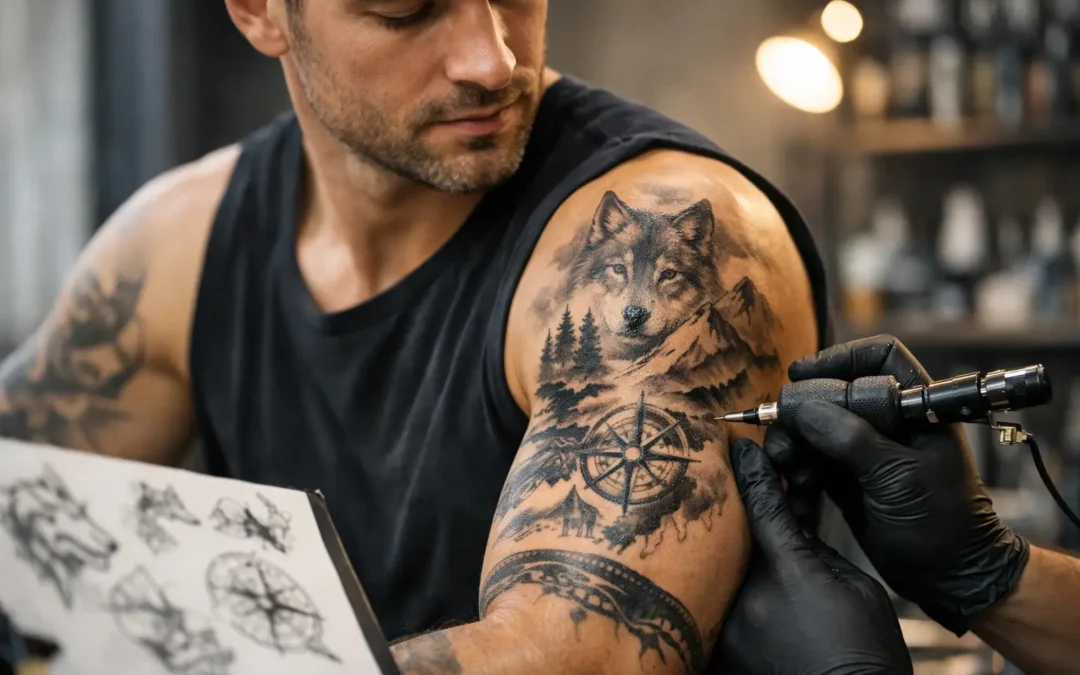
A tattoo can look impressive in a photo and still have nothing to do with you. The best custom tattoo designs for men begin somewhere more personal: a hard-earned belief, a memory, a person, a place, or simply an image that matches the way you move through life. The goal is not to fill space. It is to create artwork you will be proud to wear years from now.
Custom work gives that idea room to become something original. Rather than choosing a design from a wall, you work with an artist to shape the concept around your body, style, and long-term vision. That collaboration matters whether you want a small fine-line piece, a black-and-grey portrait, a bold Japanese-inspired sleeve, or a full-color statement tattoo.
Start With Meaning, Not a Screenshot
Reference photos are useful, but they are only a starting point. Bring images that show the mood, subject matter, composition, or level of detail you respond to. Then explain why they caught your attention. An artist can do much more with “this reminds me of my grandfather’s workshop” than “I want this exact clock.”
A strong custom design usually has one clear main idea. If you are honoring family, for example, a portrait, handwritten note, birth flower, meaningful date, or hometown landmark might all fit the story. They do not all need to appear in the same tattoo. Trying to include every meaningful detail can make a design crowded and weaken its impact.
Think about the feeling you want the piece to carry. Do you want it to feel quiet and refined, intense and dramatic, traditional and bold, or highly realistic? That answer helps guide choices in line weight, shading, color, background elements, and placement before the drawing process even begins.
Choose a Style That Fits the Idea
Style is not just decoration. It affects how the tattoo reads from across the room, how it ages, and how much detail the design can realistically hold. The right approach depends on the subject and the scale of the work.
Black and Grey for Depth and Timeless Contrast
Black-and-grey tattoos are a strong choice for portraits, religious imagery, wildlife, statues, roses, clocks, and cinematic scenes. Smooth shading can create serious depth without relying on color, while solid black areas provide contrast that keeps the tattoo readable over time.
This style works especially well for clients building a sleeve or chest piece because it can connect multiple images into one cohesive composition. The trade-off is that realism needs space. A highly detailed face or scene compressed into a small area may lose the details that make it convincing.
Full Color for Energy and Visual Impact
Color tattoos can bring a design to life in a way black and grey cannot always match. Traditional-inspired imagery, pop-culture concepts, animals, flowers, illustrative work, and Japanese-inspired designs can all benefit from intentional color choices.
Color should support the design, not compete with it. A few strong colors may create more impact than every shade available. Skin tone, sun exposure, placement, and the desired longevity of the piece all affect which palette makes the most sense, so this is a conversation worth having during your consultation.
Fine Line for Focused, Understated Work
Fine-line tattoos can feel personal without demanding attention from across the room. They are well suited to lettering, small symbols, minimal illustrations, coordinates, delicate florals, and clean geometric details.
The important reality is that fine-line work is not the same as tiny work. Lines placed too close together can soften as skin changes over time. A professional artist will help you find the scale that preserves the clean look you want instead of promising detail that will not hold up.
Japanese-Inspired Work for Large, Flowing Composition
Japanese-inspired tattooing is built for movement. Dragons, koi, tigers, snakes, masks, peonies, waves, wind bars, and clouds can flow naturally across an arm, leg, back, or chest. These designs often feel powerful because the background is part of the structure, not an afterthought.
This approach is ideal for larger projects and sleeves, but it requires commitment to composition. A piece may need room to breathe beyond the initial central image. Trusting the overall layout often produces a stronger result than treating every session as a separate tattoo.
Let Placement Shape the Design
Your body is not a flat canvas. A design that looks balanced on a screen can feel awkward if it does not account for muscle, movement, and natural contours. Placement should be part of the design conversation from the beginning.
The upper arm and forearm offer flexible space for portraits, animals, lettering, and medium-sized scenes. The chest creates a powerful setting for symmetrical work, family themes, or larger central imagery. Calves and thighs allow for substantial detail while remaining easier to cover when needed. The back gives an artist room for a full composition with real scale.
Visibility is a practical consideration too. A hand, neck, or finger tattoo makes a clear statement, but it may affect professional settings and often receives more sun and wear. Areas near joints, ribs, feet, and hands can also be more challenging during the session. Pain tolerance matters, but it should not be the only thing deciding placement. A tattoo that fits the body well is worth planning for.
Build for the Long Term
A custom tattoo is permanent, but that does not mean every idea needs to be overly serious. It does mean you should look beyond the first impression. Ask whether the design will still feel like you when your style changes, whether it leaves room for future work, and whether the details are scaled appropriately.
This is particularly important for sleeves and cover-ups. A sleeve benefits from an overall plan, even if it is completed in stages. Repeating elements, contrast, background flow, and intentional negative space can make individual tattoos feel connected rather than patched together.
Cover-up tattoos deserve an honest conversation. The new artwork must work with what is already on the skin, including its darkness, size, and placement. Sometimes a larger, darker design is the best option. Other times, lightening sessions may be recommended before tattooing. A skilled artist will not pretend that every old tattoo can disappear under a small, light-colored image.
What a Productive Consultation Looks Like
The consultation is where a loose idea starts becoming a tattoo with direction. Come prepared to discuss the subject, preferred style, placement, approximate size, and any elements you absolutely want included. It also helps to share what you do not want. If you like realism but do not want a gloomy look, say so. If you want a wolf but not the usual snarling profile, that is useful creative direction.
Be open to the artist’s recommendations. An experienced tattoo artist is considering factors that do not show up in a Pinterest image: how the design will wrap, where shadows need to sit, how linework will heal, and what changes will make the artwork stronger. Collaboration does not mean giving up your vision. It means working together to protect it.
At Socrates Ink Gallery, custom projects are approached as original artwork, with the consultation and drawing process built around the client’s idea rather than a generic template. That artist-led process is especially valuable when a design has personal meaning or needs to fit into existing work.
Prepare for the Session With Respect for the Work
Great tattoos are not created by design alone. Arrive rested, hydrated, and having eaten a solid meal. Wear clothing that gives access to the placement and can handle a little ink. Avoid showing up sunburned, and be straightforward about medications, skin conditions, or anything else that could affect the appointment.
Aftercare is part of the investment. Follow your artist’s instructions, keep the tattoo clean, avoid picking at peeling skin, and protect it from direct sun once it has healed. Good aftercare supports clean healing and helps preserve contrast and color.
The right tattoo should feel considered, not rushed. Bring the story, be honest about your goals, and give the design enough room to become art. When the idea, placement, and artist are aligned, the result is more than a good tattoo. It becomes a piece of your life, made visible.