
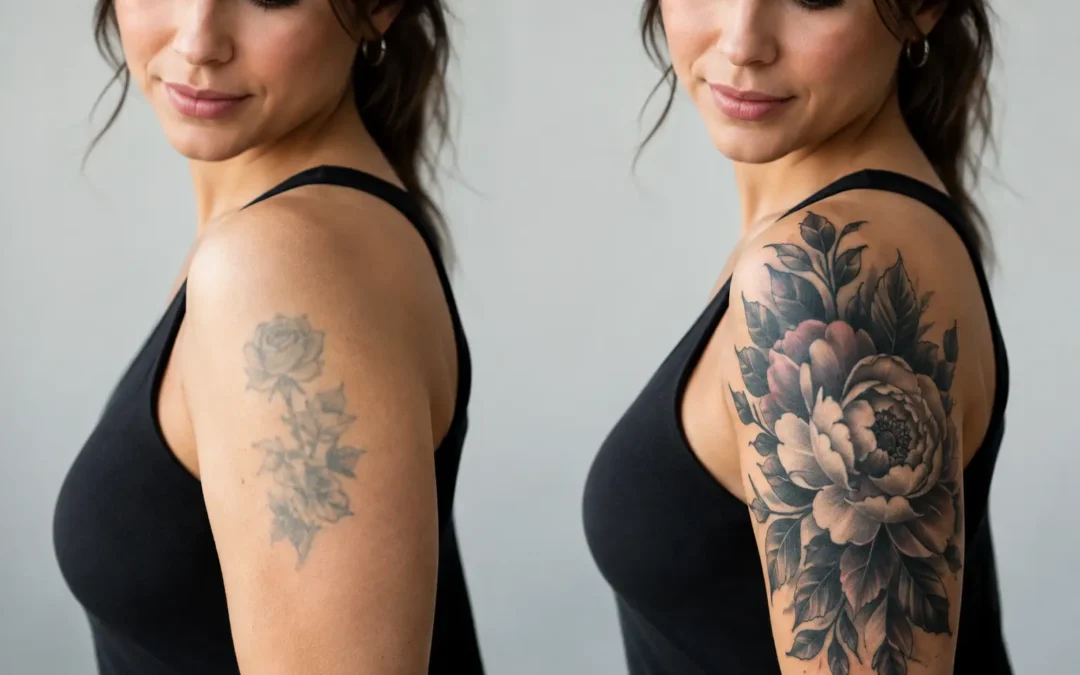
That small name on your wrist, faded symbol on your shoulder, or design that no longer feels like you does not have to stay the center of attention. Learning how to hide old tattoo work is less about placing a darker image on top of it and more about giving the skin a new, intentional piece of art. The strongest cover-ups do not look like cover-ups. They look like the tattoo you wanted all along.
A successful result starts with an honest conversation about what is already there, what you want to see instead, and what your skin can realistically support. Some old tattoos disappear beautifully into a new design. Others need extra planning, a larger composition, or a few laser sessions before the new work begins.
Start With What You Have, Not Just What You Want
Every cover-up begins with the existing tattoo. Its age, color, line weight, placement, size, and level of fading all affect the options. A soft, faded black tattoo usually gives an artist more room to work with than a newer piece made with dense black ink. Bright colors can be covered, but they often influence the color palette and subject matter of the new design.
Placement matters just as much. Skin on the upper arm, thigh, back, and calf often offers room for a larger composition that can carry the eye away from the old piece. Smaller areas, such as fingers, ankles, ribs, and the inner wrist, can be more limiting because there is less space to build contrast, texture, and flow.
Bring clear photos to your consultation, but expect an in-person look as well. Lighting can make an old tattoo appear lighter or darker than it really is, and the texture of healed skin matters. A professional artist should explain what is possible without promising that every trace of the old design will vanish on the first pass.
How to Hide an Old Tattoo With the Right Design
The goal is not to create a dark patch over an old tattoo. It is to redirect attention through shape, movement, shading, and contrast. That takes custom design work.
A cover-up usually needs to be larger than the original tattoo. This is not a sales tactic. It gives the artist enough space to blend the old ink into a natural composition rather than forcing a new image into the exact footprint of the previous one. A small script tattoo may become part of a flower stem, a portrait background, a snake, ornamental detail, or a section of a larger sleeve.
Certain styles naturally offer more cover-up flexibility. Black and grey realism can use shadows, texture, smoke, fabric, foliage, and background depth to break up old lines. Japanese-inspired designs can create strong movement with waves, wind bars, clouds, flowers, or scales. Full-color work can shift attention with saturated tones, though color does not always cover dark ink as easily as people expect. Fine-line tattoos are often beautiful on clear skin, but they are rarely the best standalone answer for a bold, existing tattoo.
The right subject depends on the original piece and your personal taste. A great artist does not force everyone into roses, skulls, or blackwork simply because those designs cover well. The best option is one that works technically and still feels personal when you look at it years from now.
Use Contrast and Flow, Not Solid Black
Many people assume the answer is to cover an unwanted tattoo with solid black. Sometimes blackwork is exactly the right artistic direction, especially for clients who genuinely love the style. But dense black is not the only solution, and it can make future changes more difficult.
Strategic contrast tends to create a more natural result. Darker areas can absorb the strongest parts of the old tattoo, while lighter skin breaks and midtone shading keep the new composition readable. Curved elements, textured backgrounds, and directional movement help the eye follow the new design instead of searching for what used to be there.
This is why a custom drawing matters. A generic image copied onto the area may not account for the old lines underneath. The design should be built around the challenge, not simply placed over it.
When Laser Lightening Makes Sense
Laser removal is not always necessary, but partial lightening can expand your options. You do not have to remove a tattoo completely to make a cover-up more successful. Even a few sessions may soften dark lettering, heavy outlines, or concentrated color enough for a new design to read more cleanly.
This can be especially helpful if you want a lighter, more delicate tattoo than the old one allows. It may also be worth considering when the existing ink is very dark and the available placement is small. Laser lightening adds cost, time, and healing periods, so it is a trade-off rather than an automatic step.
An experienced tattoo artist can tell you whether lightening is likely to improve the design outcome. If you decide to pursue it, allow the skin to fully heal before tattooing again. Rushing from one treatment into a cover-up can compromise both the skin and the final artwork.
Come to Your Consultation With a Clear Direction
You do not need to arrive with a finished drawing. In fact, leaving room for the artist’s expertise often leads to a stronger tattoo. What helps most is knowing the feeling, style, and subject matter you want to move toward.
Share what you dislike about the old tattoo, but spend more time talking about what you want next. Maybe you want a piece that feels elegant instead of impulsive, bold instead of tiny, or symbolic rather than literal. Reference images are useful for showing mood, placement, color preferences, and detail level, but your final tattoo should be designed for your body and your cover-up needs.
Be open about your non-negotiables. If you do not want an all-black design, say so. If you want to keep the piece within a certain area, mention it early. Your artist can then explain whether those preferences work together or whether one needs to give for the tattoo to succeed.
Give the New Tattoo a Real Healing Window
A cover-up is still a fresh tattoo, and it needs proper aftercare. Follow your artist’s instructions, keep the area clean, avoid soaking it, and protect it from sun exposure while it heals. Florida sun can fade tattoos quickly, especially during the early healing phase, so consistent sunscreen after healing is one of the simplest ways to protect the color and contrast of your new piece.
Expect the tattoo to look different as it settles. Fresh ink can appear darker, sharper, and more saturated than healed ink. Some cover-ups also need a touch-up after healing, particularly when the original tattoo was very dark or heavily saturated. That is not a failure. It is part of making sure the final piece looks balanced and intentional.
Choose an Artist Who Is Honest About the Process
Cover-up work is problem-solving as much as it is tattooing. Look for an artist whose portfolio shows healed tattoos, strong shading, clean composition, and examples of cover-ups that do not feel heavy or crowded. The consultation should feel collaborative, but it should also include professional guidance. A good artist will not agree to a design that is unlikely to work just to secure an appointment.
At Socrates Ink Gallery, the approach is built around translating your idea into custom artwork that respects both your vision and the realities of the skin. Whether your old tattoo needs a focused redesign or the first chapter of a larger sleeve, the process should feel thoughtful, clean, and personal.
The tattoo you regret does not have to define the space it occupies. Give the next design enough room, choose an artist who will be direct with you, and trust the process of turning old ink into artwork you are proud to wear.