
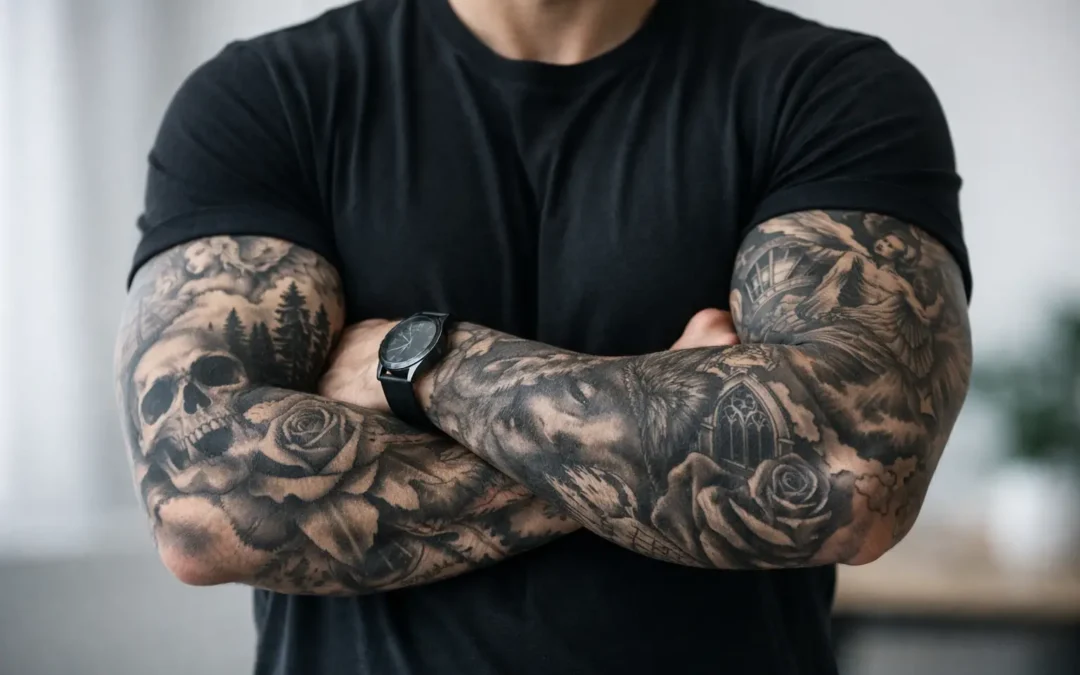
A search for a “black and grey tattoos sleeve” often begins with a few saved images, but a sleeve worth wearing for life needs more than a collection of cool references. It needs a point of view. The strongest sleeves feel intentional from the shoulder to the wrist, with imagery that tells your story and shading that still reads clearly from across the room.
Black and grey work has staying power because it relies on contrast, depth, and composition instead of chasing a color trend. Whether your idea centers on family, faith, music, mythology, Florida roots, or a visual style that simply feels like you, the goal is the same: create one connected piece of art, not a patchwork of unrelated tattoos.
Start With the Story, Not the Filler
A full sleeve gives you serious space, and that can make the first decision feel bigger than it needs to be. You do not need every detail figured out before a consultation. You do need a clear sense of what matters most.
Bring references for mood, not just images you want copied. A photograph might show the lighting you like. A statue may suggest the level of realism. An old family item, a meaningful date, or a favorite animal can become part of the design without being reproduced literally. This gives the artist room to translate your vision into original work that fits your arm.
A sleeve usually benefits from one main focal point, such as a portrait, religious figure, tiger, skull, warrior, clock, or architectural scene. Supporting elements then create movement around it. Smoke, clouds, roses, filigree, fabric, background texture, and negative space all have a purpose when they guide the eye rather than simply fill an empty area.
The right concept is personal, but it also has to work visually. A meaningful object with very little detail may need to be enlarged, paired with a stronger background, or reinterpreted to hold its place in the composition. Trust the design process when an artist recommends a change for flow, readability, or longevity.
What Makes a Black and Grey Tattoo Sleeve Work
Black and grey tattoos create depth by using solid black, diluted washes, skin tone, and carefully placed highlights. The best work is not just gray all over. It has a full range, from rich blacks that anchor the design to soft transitions that create atmosphere.
Contrast gives the sleeve its life
Without enough dark values, a detailed sleeve can look flat once the initial freshness settles. Without enough open skin and light areas, it can become dense and difficult to read. This balance is especially important in realism, where a face, animal, or statue needs distinct shadows to keep its shape.
Contrast also determines how the artwork reads at different distances. Fine details reward someone standing close. Bold forms, clean silhouettes, and deliberate dark areas make the sleeve recognizable from several feet away. A strong custom sleeve is built for both views.
Placement changes the design
An arm is not a flat canvas. The shoulder rounds, the inner bicep is more protected, the elbow moves constantly, and the forearm is highly visible. A design that looks great in a square reference photo may need major adjustment to work around those transitions.
Large focal points generally belong where the body gives them room, such as the outer upper arm, shoulder cap, or outer forearm. The elbow often works better as a transition area than as the home for a highly detailed face. The inner arm can carry meaningful elements that feel more private, although that area may be more sensitive during the session.
A skilled artist plans for how the sleeve looks with your arm relaxed, bent, and moving. That is why stenciling and placement review matter before tattooing begins.
Choose a Style That Supports Your Idea
Black and grey is not one look. Realism is a natural fit for portraits, wildlife, religious imagery, statues, and objects with emotional weight. It can create incredible dimension, but it demands room. Trying to fit too many photorealistic subjects into one arm can weaken every one of them.
Illustrative black and grey offers more freedom with linework, texture, and stylized forms. It can be ideal for mythology, nature, horror, or graphic concepts. Fine-line elements can add elegance, but they should be used thoughtfully in a sleeve so they do not disappear beside heavy shading.
Japanese-inspired black and grey work can make a powerful sleeve because it is naturally designed around body flow. Dragons, snakes, tigers, masks, flowers, waves, and wind bars can create movement from shoulder to wrist. These projects deserve research and respect for the imagery, rather than a random mix of symbols taken out of context.
The best choice depends on what you want people to feel when they see the piece. If the story requires realism, build around it. If the energy matters more than literal detail, an illustrative approach may give you more freedom.
Plan the Sleeve as a Long-Term Project
A full sleeve is rarely a one-day decision or a one-session appointment. Breaking the work into sessions allows the artist to build layers, assess healing, and keep the composition consistent as it develops. It also gives you time to settle into the process instead of rushing through a permanent decision.
Before your consultation, think about your finish line. Are you starting with a half sleeve that may grow later? Do you want coverage from the shoulder to the wrist, or do you prefer open skin around the elbow and inner arm? Are there existing tattoos that need to be incorporated, refreshed, or covered?
Honest answers protect the final design. A small piece placed without a future plan can limit your options later. If you already know you want a complete arm, say so from the start. The artist can create a foundation that leaves room for the full story.
Budget and schedule matter, too. Large custom work is an investment in design time, technical execution, and multiple tattoo sessions. It is better to plan the project realistically than to force a rushed version that compromises the artwork. Quality is visible in the drawing, the application, and the way the tattoo heals over time.
Prepare for Better Sessions and Better Healing
Arrive rested, hydrated, and fed. Wear comfortable clothing that gives the artist access to the area being tattooed, and plan for the fact that longer sessions require focus from both of you. Avoid alcohol before an appointment, and speak up if you need a break. Clear communication is part of a professional tattoo experience.
Aftercare is where your role becomes essential. Follow the instructions provided for cleaning, moisturizing, and protecting the tattoo. Do not pick at flaking skin or soak a fresh tattoo in pools, hot tubs, or the ocean. In Tampa, sun exposure is another real concern. Fresh tattoos need to stay out of direct sun, and healed black and grey work looks sharper when protected with sunscreen.
Healing can make a tattoo look temporarily dull or cloudy before the settled contrast returns. Give it time. If something does not seem right, contact the studio instead of relying on conflicting advice from social media.
Choose the Artist, Then Trust the Process
Look beyond a single close-up photo when choosing an artist for a sleeve. Review healed work, full-arm compositions, clean transitions, saturated black areas, and the way portraits or detailed elements hold up in real skin. You are looking for consistency, not one lucky image.
The consultation should feel collaborative. You should be able to explain your idea, ask questions, and hear a professional opinion about scale, placement, and style. At Socrates Ink Gallery, the process begins by understanding what the tattoo means to you, then developing original artwork that belongs on your body, not someone else’s.
A clean, professional environment matters just as much as the design. Your artist should take sanitation seriously, use appropriate equipment and procedures, and make you feel comfortable throughout the appointment. Great tattooing is equal parts artistic judgment, technical discipline, and trust.
Your sleeve does not need to explain every chapter of your life to everyone who sees it. It only needs to feel true when you look down at your arm years from now. Bring the story, stay open to expert direction, and give the artwork the space and time it deserves.