
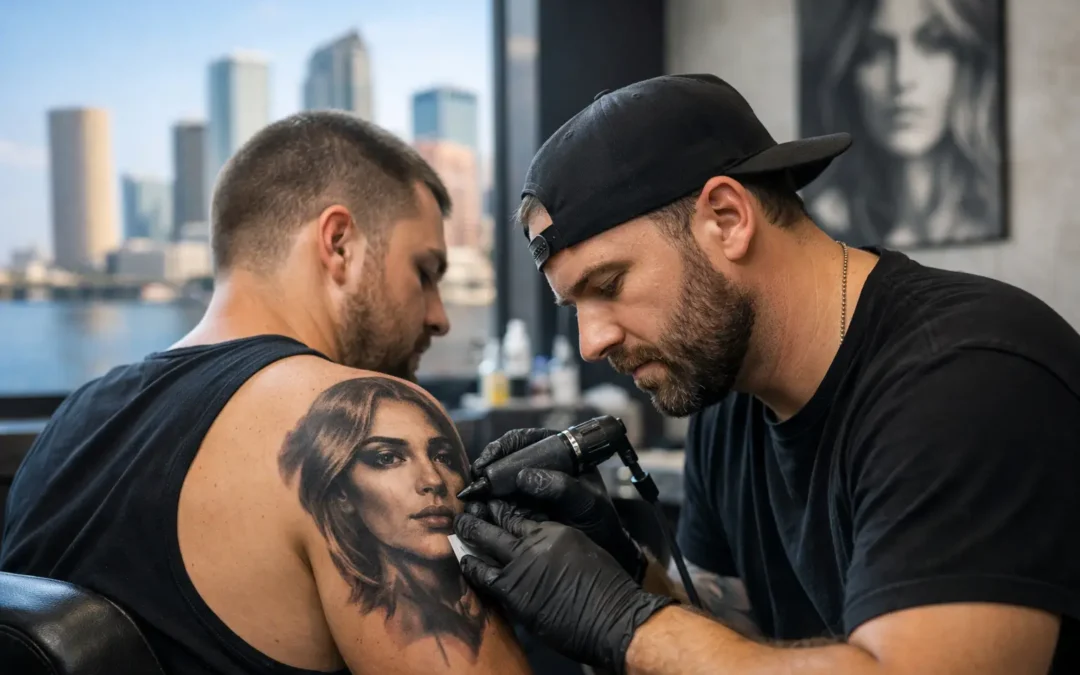
A portrait tattoo has to do more than resemble a face. It has to hold a memory, a relationship, or a moment that matters every time you see it. When looking for a portrait tattoo artist Tampa clients trust, the decision should come down to artistic judgment, careful planning, and a studio experience that makes you feel confident from the first conversation through healing.
Whether the subject is a child, parent, partner, pet, cultural icon, or personal hero, portrait work is a high-stakes form of tattooing. Small choices in contrast, placement, expression, and detail can shape how the piece reads years from now. That is why the best portrait tattoos begin long before the needle touches skin.
What Makes Portrait Tattoo Work Different
Portrait tattoos require an artist to translate a two-dimensional reference into artwork that works on a living, changing surface. Skin has texture, curves, movement, and limitations. A photograph may have beautiful detail, but not every detail will transfer well at tattoo scale.
A strong artist studies the elements that make a person recognizable: the shape of the eyes, the angle of the nose, a smile, hair texture, or the relationship between light and shadow. In black and grey work, smooth value transitions and controlled contrast often carry the likeness. In color portraits, the artist also has to manage skin tones, undertones, saturation, and long-term color balance.
This is not about copying every pixel in a photo. It is about identifying what must remain clear when the tattoo settles into the skin and naturally softens over time. A portrait can be highly realistic, stylized, or combined with meaningful imagery. The right direction depends on your vision, the reference quality, the available space, and your artist’s honest recommendation.
Choosing a Portrait Tattoo Artist in Tampa
Start with the portfolio, but look at it with purpose. A collection of tattoos may be visually impressive without showing consistent portrait skill. Focus on healed work when possible, not only fresh tattoos photographed under ideal lighting. You want to see clean structure, believable facial proportions, readable features, controlled shading, and portraits that still feel alive after healing.
Look for work similar to the piece you want. An artist can be excellent at lettering, traditional tattoos, or abstract color while not specializing in realism. If your idea is a black and grey memorial portrait, review black and grey portraits. If you want a color portrait of a pet, find examples that show fur texture, eye detail, and color choices on real skin.
The consultation matters just as much as the portfolio. A professional artist should ask about the story behind the tattoo, review your references, discuss size and placement, and be direct about what will produce the strongest result. Sometimes that means recommending a larger design. Sometimes it means simplifying a busy background or choosing one photo over another. Honest guidance protects the finished artwork.
At Socrates Ink Gallery, the custom process is built around that kind of collaboration. The goal is not to force every client into a preset design. It is to take the personal details that matter most and turn them into artwork that fits the body and the vision behind it.
Bring Reference Photos That Give the Artist Something to Work With
The photo you love emotionally may not always be the best photo for a tattoo. A dim, blurry image or a face covered by harsh shadows can make accuracy harder to achieve. That does not automatically rule it out, but it may require a more interpretive approach.
Bring multiple images whenever possible. One photograph may show the best facial expression, another may reveal the eyes clearly, and another may provide useful lighting or hair detail. For a pet portrait, include close-ups that show the eyes and muzzle along with a photo that captures the animal’s personality.
Tell the artist what cannot be missed. Maybe it is your father’s distinct smile, your grandmother’s earrings, your dog’s tilted ears, or the way a loved one wore their hair. Those details help guide the drawing process. At the same time, leave room for professional interpretation. A tattoo artist is creating a design for skin, not printing a photograph.
Size and Placement Protect the Details
Portrait tattoos usually need enough room to breathe. A face placed too small can lose the subtle details that create likeness. Fine lines may blur together as the tattoo ages, and delicate shading can become muddy when there is not enough space between features.
The ideal size depends on the complexity of the portrait and the body placement. A simple, high-contrast face may work at a smaller scale than a detailed realism piece with a background, flowers, script, or multiple subjects. Forearms, upper arms, thighs, calves, chest panels, and backs often give an artist more usable space. Areas with frequent movement, heavy friction, or tight curves may call for design adjustments.
Placement is personal, but it should also be practical. Consider how often you want to see the tattoo, how it will fit with existing work, and whether the body area supports the level of realism you want. An experienced artist will help you weigh those trade-offs before the appointment, not after the stencil is on.
The Design Should Feel Personal, Not Overcrowded
A portrait can stand alone with remarkable impact. It can also become part of a larger composition with meaningful details such as dates, handwriting, florals, clouds, religious imagery, a city skyline, or an object connected to the subject. The key is hierarchy.
The face should remain the focal point unless you intentionally want a more symbolic composition. Too many competing elements can pull attention away from the likeness. A thoughtful background can create depth and tell more of the story, while an overloaded background can make the tattoo feel busy.
During the design conversation, explain the meaning behind every element you want included. Your artist can help decide which ideas belong in the first session, which can become part of a future sleeve or larger piece, and which details may be better left out. Custom tattooing works best when the design has a clear visual direction.
A Clean, Professional Process Is Part of the Art
A meaningful tattoo deserves a studio that takes safety and comfort seriously. Clean workstations, proper equipment handling, sterile procedures, and clear aftercare instructions are fundamental. You should feel comfortable asking questions about the process, especially if this is your first tattoo or your first large custom project.
The appointment experience also matters. Portrait sessions can take time, particularly when the work involves layered shading, refined highlights, or a larger composition. Come rested, hydrated, and prepared to sit. Wear clothing that gives the artist easy access to the placement area, and do not schedule the appointment on an empty stomach.
Aftercare protects the investment you have made in the art. Follow your artist’s instructions closely, keep the tattoo clean, avoid soaking it while it heals, and protect it from sun exposure. Healing is part of the process, not an afterthought. If you have questions about what you are seeing during recovery, reach out to the studio instead of guessing.
Ask the Questions That Lead to Better Work
Before booking, ask whether the artist recommends black and grey or color for your concept, what size will hold the detail, how many sessions may be needed, and whether your reference photos are strong enough. Ask about the drawing process and when placement, scale, and composition will be finalized.
You should also be ready to listen to the answer. The best result is not always the exact image you first imagined. It may be a refined version with a stronger crop, a cleaner background, more durable detail, or a placement that serves the art better. Trust is not about giving up your idea. It is about working with an artist who knows how to make that idea last.
A portrait tattoo is permanent artwork with a deeply personal subject. Take the time to choose an artist whose portfolio, process, and professionalism make you feel certain about the decision. Bring the story, bring the best references you can find, and give the design enough room to become the piece it deserves to be.