
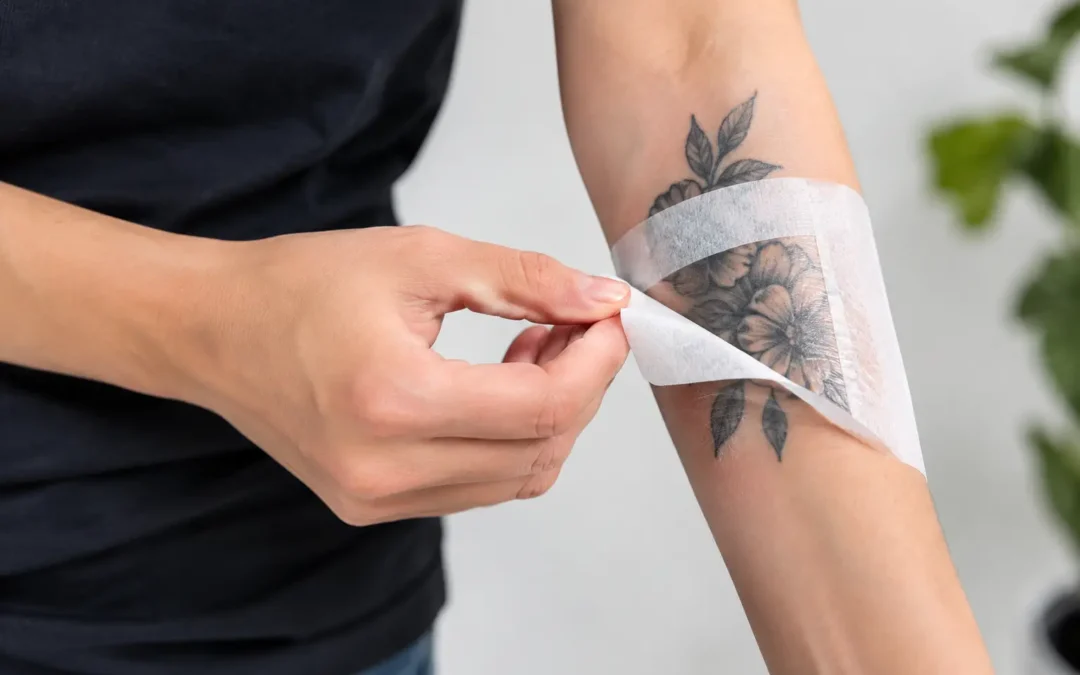
A new tattoo may look finished when you leave the studio, but the healing process has just started. One of the first questions clients ask is, “When should a tattoo bandage be removed?” The honest answer depends on the type of bandage your artist applied, how the tattoo is behaving, and the specific aftercare instructions you were given. There is no prize for removing it early, and there is no benefit to leaving the wrong type on too long.
Your artist sees the placement, saturation, skin response, and size of the tattoo firsthand. That makes their instructions the standard to follow. The guidance below helps you understand the reason behind those instructions, so you can protect the artwork you just invested in.
When Should a Tattoo Bandage Be Removed?
For a traditional plastic wrap or absorbent pad, many artists recommend removing it after a few hours, often around two to six hours. This temporary covering is designed to get you home, protect the fresh tattoo from outside contact, and contain the first round of blood, plasma, and excess ink. It is not meant to be worn overnight unless your artist specifically tells you otherwise.
Second-skin bandages, sometimes called medical adhesive film, work differently. They are intended to remain on longer, often for several days. Your artist may have you remove the first piece after 24 hours or leave it on for up to five days, depending on the product, the tattoo, and how much fluid collects beneath it. Some artists use an initial film for the first day and replace it with a fresh piece for a few more days.
That difference matters. A traditional wrap held on for days can trap moisture and bacteria against the skin. A properly applied second-skin film, on the other hand, creates a protective barrier while allowing the tattoo to heal in a controlled environment. Do not assume every clear bandage is meant to stay on for the same amount of time.
Start With Your Artist’s Aftercare Instructions
A custom tattoo is not a one-size-fits-all service, and neither is aftercare. A small fine-line tattoo on the forearm may require different practical considerations than a large, fully saturated color piece on the thigh or a black-and-grey sleeve session. Areas that bend, rub against clothing, sweat heavily, or come into frequent contact with hands can need more attention.
Your artist may also adjust the plan based on your skin. If you have sensitive skin, known adhesive reactions, or a tattoo that is releasing more fluid than expected, the ideal timing may change. Be upfront about allergies and skin concerns before your appointment. It helps your artist select an appropriate covering and give you instructions that fit your situation.
If you forget the instructions or are unsure what kind of bandage you have, contact the studio before making a guess. A quick question is better than trying to interpret advice meant for a different tattoo and a different bandage.
Traditional Wraps: Remove Them Carefully
Once it is time to remove a traditional wrap, wash your hands thoroughly first. Then take the wrap off gently and wash the tattoo with lukewarm water and a mild, fragrance-free soap. Use only your clean fingertips. Do not scrub with a washcloth, loofah, exfoliating glove, or brush.
You may see a little ink, plasma, or blood when you clean the area. That is normal during the first day. Tattoo ink is placed beneath the surface of the skin, but excess pigment and healing fluid can rise to the top. Washing removes that residue before it dries into a sticky layer.
Pat the tattoo dry with a clean paper towel and let it air dry for a few minutes. Apply only the amount of aftercare product your artist recommends. More lotion is not better. A heavy layer can leave the tattoo overly wet, clog the area, and make healing more difficult. Think light, clean, and consistent.
Second-Skin Film: Know What Is Normal
A second-skin bandage can look alarming once fluid gathers beneath it. The mixture of plasma, blood, and ink may form a dark, inky pocket, especially over a larger tattoo. In many cases, that is expected. It does not mean the tattoo is leaking out or that the design has been damaged.
What matters is whether the seal remains intact. If the film is securely adhered around the tattoo and the fluid is contained, follow the timeline your artist provided. If the bandage begins peeling enough to expose the tattoo, leaks fluid, gets punctured, or allows water to enter, remove it. Clean the tattoo and follow your artist’s next-step instructions rather than trying to tape a compromised bandage back into place.
Remove second-skin film slowly, ideally in a warm shower. Hold the skin taut and stretch the film sideways along the skin instead of pulling it straight up. This reduces discomfort and puts less stress on fresh skin. If it is stubborn, let warm water run over it and keep peeling gradually.
Do Not Rewrap a Tattoo Without Direction
Clients sometimes want to cover a new tattoo again before bed, at work, or around pets. The instinct to protect fresh art makes sense, but repeated wrapping can create more problems than it solves. Moisture and friction need to be managed, not sealed in without a plan.
Unless your artist has instructed you to use another sterile covering, leave a traditionally wrapped tattoo uncovered after the first wash. Wear loose, clean clothing that will not grind against the area. For bedtime, use clean sheets and choose clothing that reduces rubbing. A little ink transfer to bedding can happen early on, which is frustrating but usually less harmful than trapping a fresh tattoo under improvised plastic wrap.
If your work exposes the tattoo to dirt, chemicals, or heavy friction, discuss that before your appointment. Planning ahead may affect placement, scheduling, clothing, or the type of protective bandage your artist chooses.
What to Avoid During Early Healing
After the bandage comes off, the goal is to keep the tattoo clean while letting the skin recover. Avoid soaking it in pools, hot tubs, baths, lakes, and the ocean. Long showers are also not ideal during the first stage. Brief showers are fine, but standing under hot water for twenty minutes can dry and irritate healing skin.
Avoid direct sun, tanning, intense friction, and picking at flakes or scabs. Your tattoo will likely feel tight, itchy, and dry as it heals. That can be annoying, especially on larger pieces, but scratching or peeling can pull away healing skin and interfere with crisp lines or smooth color.
It also helps to pause activities that create excessive sweat or rubbing for the first few days when possible. There is a trade-off here: normal daily movement is fine, but a hard workout in tight gear can irritate a fresh tattoo in a high-friction area. Use common sense and consider the placement.
Signs You Should Contact Your Artist or a Medical Professional
Some redness, warmth, tenderness, and clear fluid are common at the beginning. These should gradually improve, not become more intense. Reach out to your artist if you are unsure whether what you are seeing is part of normal healing, particularly if a bandage has leaked or caused irritation.
Contact a medical professional promptly if you experience spreading redness, worsening pain, significant swelling, fever, pus-like discharge, red streaking, or symptoms of a serious allergic reaction such as hives, facial swelling, or trouble breathing. A tattoo studio can guide aftercare, but it cannot diagnose or treat an infection.
A quality tattoo deserves patient aftercare. Trust the instructions built around your specific piece, keep your hands clean, and give the skin time to do its work. If you are preparing for your next custom tattoo in Tampa, Socrates Ink Gallery can help you understand the full process before the needle ever touches skin.