
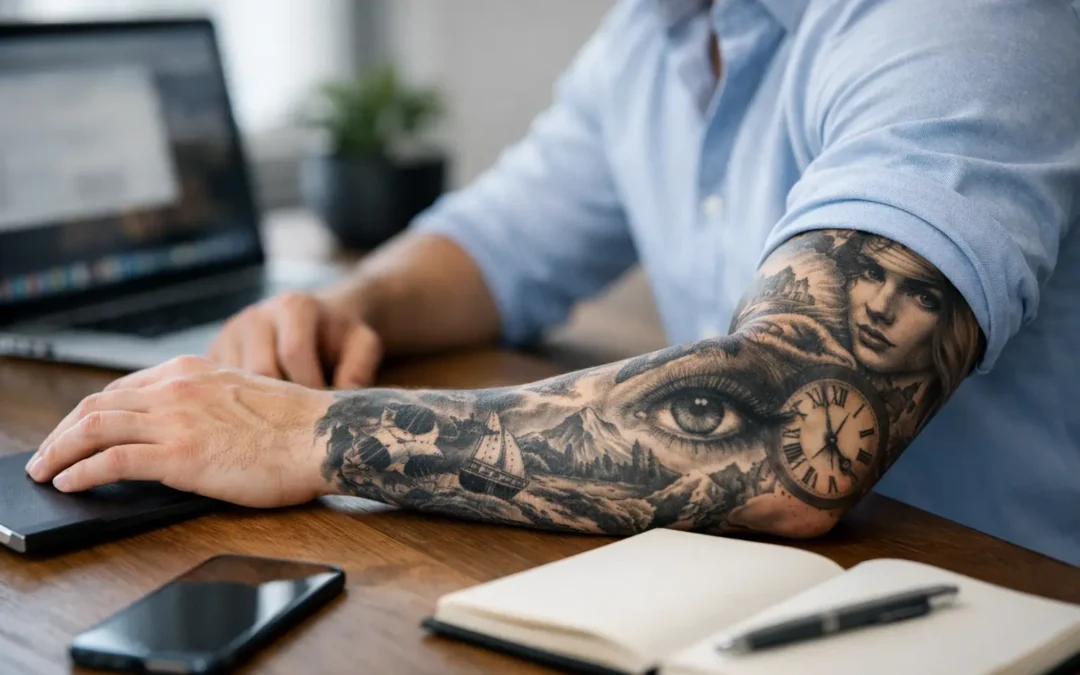
A sleeve is not just a series of tattoos placed on the same arm. The strongest full sleeves feel intentional from shoulder to wrist, with every element carrying the same visual energy. Whether you are starting with a blank arm or connecting pieces you already have, the decisions made before the first session will shape how the finished work looks for years.
Full Sleeves Start With a Real Point of View
A full sleeve gives you room to say more than a small tattoo can. It can hold family history, personal milestones, cultural references, spiritual imagery, favorite art styles, or simply a visual mood that feels like you. But more space also means more responsibility in the design. A great sleeve needs a central direction, not just a collection of good individual ideas.
Start by asking what you want someone to feel when they see the work. Maybe you want a black and grey sleeve with a cinematic, high-contrast look. Maybe Japanese-inspired imagery and bold movement fit your personality better. Perhaps a full-color sleeve is the right choice because color is part of the story. There is no single best style. The right one is the style you will be proud to wear as your taste and life continue to evolve.
A clear concept does not mean every detail must be literal. In fact, tattoos often become more powerful when the artist has room to translate an idea rather than copy a reference exactly. Bring the memories, symbols, images, and feelings that matter to you. Then let the composition turn them into artwork made for your body.
One Story or a Connected Collection?
Some clients want one continuous scene from shoulder to wrist. Others want separate subjects connected by backgrounds, texture, shading, or recurring symbols. Both approaches can create a strong sleeve.
A continuous concept is especially effective for themes such as Japanese work, nature scenes, mythology, religious imagery, or a large portrait-centered composition. A connected collection can work beautifully when your sleeve represents different chapters of your life. The key is choosing visual bridges that make the arm read as one piece. Clouds, smoke, ornamental patterns, flowers, geometric elements, architecture, and negative space can all create that connection when used with purpose.
The trade-off is simple: the more subjects you include, the more disciplined the design must be. Trying to give every idea equal size and attention can make the sleeve feel crowded. A skilled artist helps decide what deserves center stage and what should support the larger story.
Plan the Arm as a Canvas
The arm is not flat, and a sleeve should never be designed as if it were. Muscles curve, joints bend, and the viewer sees different parts of the tattoo depending on how you stand. Placement is a major part of what makes large-scale work feel natural instead of pasted on.
The outer upper arm and forearm are high-visibility areas that can support bold focal points. The inner arm can hold more personal details, softer imagery, or elements that reveal themselves as the arm moves. The elbow requires special planning because it bends often and its skin has a distinct texture. The wrist is smaller, so large or overly detailed designs can lose clarity there over time.
Negative space matters just as much as ink. It gives the eye a place to rest and helps important images stay readable. This is especially true in black and grey work, where contrast creates depth. A sleeve packed with dark shading from shoulder to wrist may look powerful on paper but become visually heavy on skin. Open skin, light values, and intentional transitions keep the artwork alive.
Think Beyond the Front-Facing Photo
A tattoo may look excellent in one photograph and still miss the mark when viewed around the arm. During the design process, ask how the major images will wrap, where they begin and end, and what the sleeve will look like from the side or back. This matters for every style, from fine-line florals to large color pieces.
If you already have tattoos on the arm, be honest about whether they need to remain visible, be incorporated, or be covered. Those are three different design paths. Working around existing pieces can be rewarding, but it may require a different background, more contrast, or a larger composition than you originally expected.
Use the Consultation to Build the Right Foundation
A serious consultation is where a sleeve becomes more than a loose idea. It is the time to discuss subject matter, style, size, placement, skin tone, existing tattoos, schedule, and the overall feeling you want the work to carry. It is also where you can set realistic expectations about what will work well on the body.
Come prepared with reference images, but do not expect an exact duplicate of someone else’s tattoo. References are useful for showing preferred styles, expressions, color palettes, layout ideas, and levels of detail. They give your artist a starting point. The goal is original artwork that reflects your vision, not a copy that belongs on someone else.
At Socrates Ink Gallery, the process is built around that translation from idea to custom design. Omar Cruz works with clients to shape the concept before committing ink to skin, which matters even more on a project as visible and permanent as a sleeve.
Be open about what you do not like, too. If you want to avoid skulls, heavy color, ultra-fine detail, or certain symbols, say so early. Clear feedback protects the concept and makes the design process more productive.
Full Sleeves Are Built Over Sessions
A sleeve is a commitment of time, healing, and focus. Rushing through a large project just to finish faster can compromise comfort and design quality. Multiple sessions allow the artist to work carefully, assess how your skin heals, and maintain consistency as the piece develops.
Session count depends on the style, coverage, amount of detail, color saturation, and whether the arm includes cover-up work. A black and grey sleeve with large areas of smooth shading may take a different path than a color sleeve packed with layered imagery. Fine-line work can look delicate, but it still requires precision and patience. Your artist can give a more meaningful estimate after discussing your specific design.
Plan around your real life. Avoid booking major sessions immediately before a beach trip, a physically demanding event, or a time when you cannot follow aftercare instructions. Florida heat, sun exposure, and swimming can make healing harder when you are not prepared. Fresh tattooed skin needs protection, clean clothing, and time away from pools, oceans, and direct sun.
Budget for Craft, Not Just Coverage
A sleeve is not the place to choose based only on the fastest timeline or the lowest number. You are paying for artistic planning, technical execution, quality materials, a clean professional environment, and the experience of someone who understands how tattoo art heals on skin.
It is reasonable to have a budget. Share it during the consultation so the project can be planned responsibly. Sometimes that means completing the sleeve in phases, starting with the most important focal point, or adjusting the complexity of the concept. A thoughtful plan is better than cutting corners on an artwork you intend to keep.
Protect the Work Between Appointments
Aftercare is part of the tattoo process, not an optional final step. Follow the instructions your artist gives you, keep the area clean, avoid picking or scratching, and use only the recommended amount of aftercare product. Over-moisturizing can be as unhelpful as letting the tattoo dry out completely.
As the sleeve grows, protect healed sections during new appointments. Wear clean, loose clothing when possible, stay hydrated, and arrive rested and fed. If you have questions about healing, irritation, or how to prepare for the next session, ask. Professional guidance is always better than guessing.
Years later, sun protection remains one of the simplest ways to keep your tattoo looking sharper. UV exposure can soften contrast and fade color, particularly in areas that are regularly exposed.
A full sleeve should feel like it belongs to you, not like a trend you borrowed for a season. Give the idea room to develop, choose an artist whose work you trust, and let the process honor the story you are putting on your skin.