
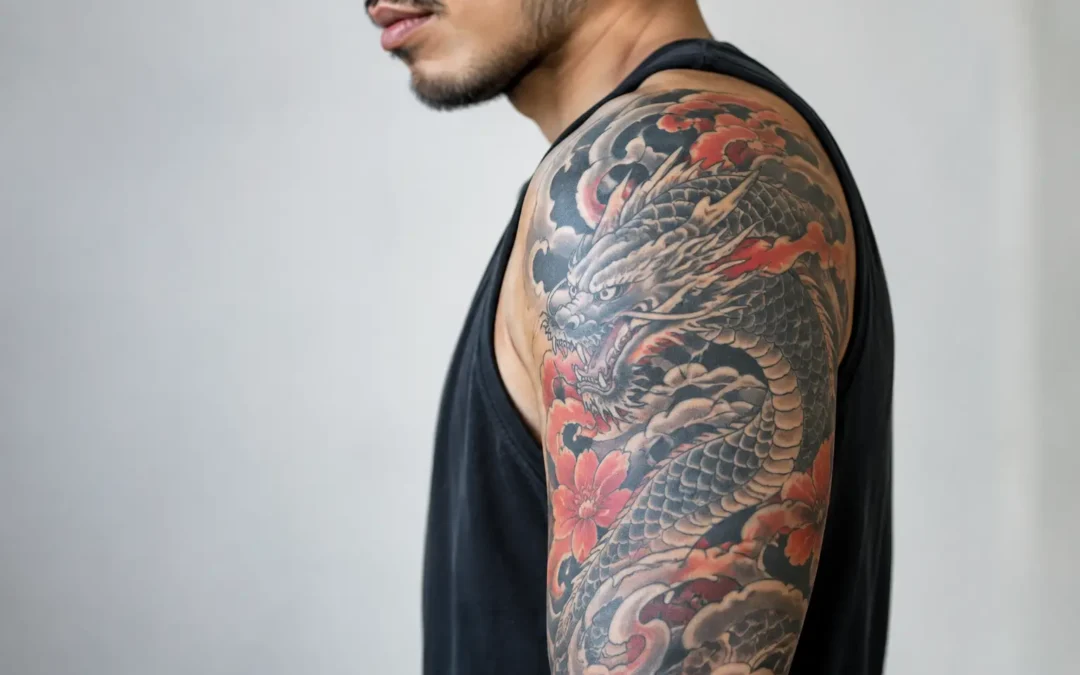
A Japanese tattoo should feel intentional from the first line to the final session. The sleeve, back piece, or smaller motif may begin with a dragon, koi, tiger, or flower, but the strongest Japanese tattoos are built around movement, contrast, symbolism, and the person wearing them. This is not artwork that benefits from rushing a reference image onto skin. It deserves a clear vision, a thoughtful design process, and an artist who knows how every element needs to work together.
Why Japanese Tattoos Have Such Visual Power
Japanese-inspired tattooing is often recognized for large-scale compositions, confident outlines, saturated color, and imagery that seems to move with the body. Wind bars, waves, clouds, smoke, maple leaves, and peonies are not random background details. They guide the eye, frame the main subject, and help the design flow across an arm, leg, chest, or back.
That sense of flow is what separates a carefully designed piece from a collection of disconnected images. A dragon can curve around the arm. A koi can travel upward through water. A tiger can be positioned to use the shoulder, chest, or thigh as part of its natural movement. The body is not just a surface. It is part of the composition.
Traditional Japanese tattooing, often associated with irezumi, carries a deep history and visual language. Modern custom work can be inspired by that language while still reflecting a client’s own taste and story. The key is approaching the style with respect rather than treating meaningful imagery as decoration alone.
Meaning Matters, but Context Matters Too
Many clients are drawn to Japanese imagery because it communicates strength, perseverance, protection, transformation, or beauty. Those ideas can make a tattoo personal, but symbols do not have one fixed meaning in every context. A koi is commonly connected with determination and perseverance, while a dragon may represent wisdom, power, or protection. Peonies can suggest prosperity and courage. Chrysanthemums are often tied to longevity and renewal.
The best starting point is not, “What symbol should I get?” It is, “What do I want this tattoo to say about me?” Maybe the piece marks a hard-earned new chapter. Maybe it honors discipline, family, resilience, or a personal connection to the artwork. That answer gives the artist something real to design from.
It is also worth taking time to understand the imagery you choose. Japanese tattoo traditions are culturally significant, and certain subjects have associations that go beyond a quick online description. A professional artist can help you build a design that feels visually strong and personally honest without making assumptions or forcing symbolism that does not fit.
Choosing a Subject That Fits Your Story
A large Japanese-inspired piece usually has one primary subject and supporting elements that create rhythm around it. Keeping that hierarchy clear is important. When every area competes for attention, even great individual images can lose their impact.
A dragon works well for clients who want a bold, flowing design with plenty of motion. It can be powerful in black and grey, full color, or a controlled combination of both. Koi are naturally suited to sleeves, forearms, calves, and thigh pieces because their movement can follow the shape of the body. Tigers bring intensity and work especially well in compositions that need a strong focal point across the chest, shoulder, or leg.
Floral elements can change the entire mood of a tattoo. Peonies add richness and softness against a fierce dragon or tiger. Cherry blossoms can create a lighter, more delicate atmosphere, while maple leaves bring a seasonal, dramatic feel. Waves, clouds, and wind bars can unite separate areas of the design so it reads as one piece rather than separate tattoos placed close together.
If you are planning a smaller tattoo, the same principles still apply. A single flower, mask, koi, or small dragon can look excellent when simplified for the available skin. The trade-off is detail. Tiny scales, facial expressions, and layered backgrounds may not age well when compressed into a small space. A good artist will tell you when a concept needs more room instead of promising details that will not hold up over time.
Planning Japanese Tattoos for the Body
Placement should be decided before the drawing is finalized. A design that looks great on a flat screen can feel stiff once it is placed on a moving arm or curved shoulder. The artist needs to consider how the piece will look from the front, side, and back, as well as how it connects to existing tattoos.
For sleeves, think beyond the first appointment. Are you looking for a half sleeve, a full sleeve, or a design that may eventually extend onto the chest? Leaving this question unanswered can make future expansion harder. It is possible to add on later, but planning ahead gives the artist more freedom to create clean transitions and balanced negative space.
Back pieces offer the largest canvas and can support more storytelling, but they require patience and commitment. A full back can include a central subject, dramatic background, and multiple supporting elements without feeling crowded. A chest panel or leg sleeve can provide a similarly bold presence with a more focused commitment.
Pain and healing are practical parts of placement, too. Ribs, sternum, feet, and areas near joints can be more challenging for many clients. That does not mean they are off limits. It means the design and session schedule should respect your comfort level and your ability to sit well. Great work takes focus from both the artist and the client.
Color, Black and Grey, or Both?
Traditional Japanese palettes often use strong reds, greens, golds, blues, and black, creating contrast that stays visible from a distance. Full color can make a piece feel electric and rich, especially with floral work, koi, dragons, and masks. It also requires thoughtful planning so the colors stay balanced rather than competing.
Black and grey Japanese-inspired tattoos can feel equally powerful. They rely more heavily on line weight, shading, texture, and negative space. This approach can be a strong fit for clients who want a more restrained look, have existing black-and-grey work, or prefer a design that emphasizes form over bright color.
There is no universally better choice. Skin tone, placement, lifestyle, existing tattoos, and personal style all matter. During a consultation, bring your inspiration, but stay open to professional direction. Reference photos help communicate mood and subject matter. They should not become a request to copy someone else’s tattoo exactly.
The Consultation Is Where the Artwork Starts
A custom Japanese tattoo is not selected from a wall and completed without conversation. The consultation is where the artist learns what matters to you, reviews placement, discusses scale, and identifies what needs to be included or left out. This is also where you should be honest about your budget, timeline, and whether you expect to build the piece over multiple sessions.
Ask to see how the artist approaches large-scale flow, black packing, color saturation, and healed work. A fresh tattoo can look impressive under studio lighting, but healed results reveal how well an artist designs for the long term. You should also feel comfortable asking about scheduling, preparation, aftercare, and how the drawing process works.
At Socrates Ink Gallery, the process is built around translating your idea into original artwork, not handing you a generic version of someone else’s vision. That means there may be adjustments to placement, scale, or detail along the way. Trusting that process helps create a tattoo that belongs on your body, not just in a reference folder.
Commitment Does Not End When the Session Does
Large Japanese tattoos are often completed over several appointments. Healing time between sessions is part of the plan, not a delay. Your artist will provide aftercare instructions based on the work completed, and following them protects both the tattoo and your skin.
Keep the healing tattoo clean, avoid picking or scratching, and protect it from excessive sun exposure. Swimming, heavy friction from clothing, and intense workouts may need to be adjusted during early healing. Long-term, sunscreen and healthy skin care make a real difference in preserving contrast and color.
A lasting tattoo begins with an idea, but it earns its final impact through planning, patience, and skilled execution. Bring the story you want to carry. Let the design be built for your body, your style, and the years ahead.